
Sauces & Condiments
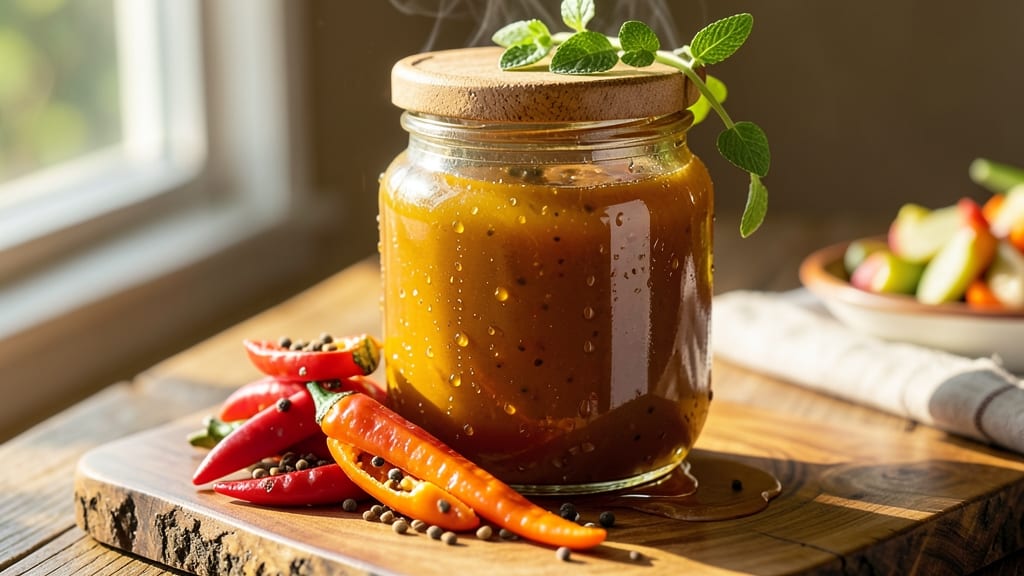
Puerto Rican hot sauce brings a bold, citrusy kick to every dish, and this authentic recipe delivers the fiery depth of ají dulce and habanero peppers. The secret lies in fermenting the peppers first—this process develops their natural sweetness while building heat that lingers on the tongue.
I’ve perfected this method after years of testing, balancing traditional techniques with modern convenience.
What makes this sauce special is its layered flavor profile: the smoky warmth of fermented ají dulce, the bright tang of lime juice, and the earthy depth of garlic and oregano. Unlike store-bought versions, this recipe captures the true essence of Puerto Rican cuisine, where heat is never one-dimensional.
The fermentation process (or quick cooking method) ensures a complex, well-rounded heat that enhances everything from grilled meats to plantains.
By the end, you’ll have a vibrant, medium-hot sauce with a glossy finish and a perfect balance of sweet, sour, and spicy notes. It’s the kind of condiment that transforms simple dishes into something extraordinary—think crispy mofongo, grilled pernil, or even a zesty marinade.
The best part? It keeps well in the fridge for weeks, so you can enjoy the flavors long after the last batch is made.
Whether you’re recreating a traditional Puerto Rican feast or adding a bold twist to everyday meals, this sauce is your secret weapon. Let’s get started on a recipe that’s as much about tradition as it is about heat.
Ingredients for authentic puerto rican hot sauce
Nine ingredients, bold flavor—this sauce is your Puerto Rican flavor bomb.
| Ingredient | Amount | Notes |
|---|---|---|
| Ají Dulce Peppers 🌶️ | 1 cup | Fresh, stems removed, seeds optional |
| Habanero Peppers 🌶️ | 4 whole | Fresh, seeded for mild heat |
| White Vinegar 🍶 | ½ cup | White or apple cider vinegar |
| Lime Juice 🍋 | ¼ cup | Freshly squeezed, no pulp |
| Garlic Cloves 🧄 | 4 cloves | Fresh, minced or grated |
| Oregano 🌿 | 1 tbsp | Dried, preferably Mexican oregano |
| Salt 🧂 | 1 tsp | Kosher or sea salt |
| Onion 🧅 | ½ whole | Yellow or white, finely chopped |
| Cumin Seeds 🌿 | ½ tsp | Toasted lightly for depth |
| Black Peppercorns 🌶️ | ¼ tsp | Freshly cracked |
Ají dulce peppers are the heart of this sauce, so track them down at a Latin market or order online—they’re sweeter than bell peppers with a subtle heat. Habaneros bring the fire, and I always use fresh ones (no powdered stuff). The vinegar is key for tang, but apple cider vinegar adds a nice fruity note if you prefer. Garlic and onion? Freshly minced makes all the difference—skip the jarred minced garbage. For oregano, Mexican oregano (from the Latin aisle) has a totally different, more complex flavor than Italian oregano. Toast those cumin seeds in a dry pan for 30 seconds—they’ll smell amazing and add depth.
No ají dulce? Substitute with red bell peppers (they won’t ferment the same, but they’ll work in a pinch). Habaneros too spicy? Mix in some sweet peppers to balance. Vinegar substitute? Lemon juice works, but it’ll be less tangy. For a smokier flavor, add 1/4 tsp smoked paprika. The sauce can be made without fermenting—just blend everything raw, strain, and cook for 15 minutes. But trust me, the fermented version (3-5 days in a jar) is where the magic happens—it develops that complex, sweet-spicy depth you can’t get any other way.
This sauce keeps for 3-4 weeks in the fridge once opened, but it gets better with age. Fermented batches? Up to 6 months if you keep them submerged in brine. Store in glass jars—plastic can absorb flavors. Double the recipe and give some away; everyone will want seconds. Freeze extras in ice cube trays for easy single-use portions. The first batch is always the best—save a little to start your next batch for even deeper flavor.
Why You'll Love This Recipe
- Slap it on anything: mofongo, pernil, even a sad avocado toast. The lime and vinegar cut through grease like a dream, making it my go-to for weeknight meals or lazy Sundays.
- Five-Ingredient Magic: I swear by this combo—ají dulce for that sweet, smoky kiss and habanero for the just-right heat. No weird spices, no fuss, just pure flavor that builds in minutes.
- Heat You Control: Between us, I’ve burned out friends with store-bought hot sauces that scream "LAUGHING FACE." This one lets you adjust the habanero—start with one, then add more if you’re brave (or reckless).
- Taco Night to BBQ: Slap it on anything: mofongo, pernil, even a sad avocado toast. The lime and vinegar cut through grease like a dream, making it my go-to for weeknight meals or lazy Sundays.
Step-by-step instructions for authentic Puerto Rican hot sauce
Let's make this fiery, citrusy hot sauce that captures real Puerto Rican flavor.
Toast the Spices for Depth of Flavor
Heat a dry skillet over medium heat and add the cumin seeds and black peppercorns. Toast them for 1-2 minutes until fragrant and lightly golden—you'll smell that warm, earthy aroma that signals they're ready. Let them cool completely before using, about 5 minutes on the counter.
This step is crucial for building flavor. Toasting the spices brings out their natural oils and aromatics, which will infuse into the hot sauce and give it that authentic, complex taste you can't get from raw spices. Don't rush this—let them cool fully to prevent burning the peppers later.
Char the Peppers and Onion
In the same skillet (now clean), heat 1 tablespoon olive oil over medium-high heat. Add the 4 whole habanero peppers and ½ whole onion (cut into quarters). Cook for 8-10 minutes, turning occasionally, until the skin blackens in spots and the onion softens. The peppers should smell smoky—this is what gives the sauce its depth.
Work quickly here. The peppers should blister but not burn completely. If they start to char too much, move them to a plate to cool. Let everything cool completely before blending—this prevents the sauce from turning bitter. The charred peppers will give that smoky, slightly sweet base that's characteristic of authentic Puerto Rican hot sauce.
Blend the Base Ingredients
Transfer the charred peppers and onion to a blender. Add the 1 cup ají dulce peppers (stems removed), 4 cloves garlic (minced), 1 tablespoon oregano, and 1 teaspoon salt. Pulse until everything is finely chopped but not completely smooth—you want some texture in the sauce.
Here's the thing—don't skip the texture. A smooth sauce loses some of that rustic, handmade quality. Pulse until it's finely chopped but still has some bite. This is where the sauce gets its authentic, slightly chunky character. If needed, add 1-2 tablespoons water to help the blending process, but keep it minimal.
Cook and Simmer the Sauce
Pour the blended mixture into a saucepan and add the ½ cup white vinegar and ¼ cup lime juice. Bring to a boil over medium-high heat, then reduce to a simmer. Let it cook uncovered for 20-25 minutes, stirring occasionally, until it thickens slightly and the flavors meld together. You'll see the sauce reduce and concentrate—this is when it starts to develop its signature tang.
Taste as you go. The sauce should be fiery but balanced with the sweetness of the ají dulce and the brightness of the lime. If it's too thin, simmer longer—you want it to coat the back of a spoon but still be pourable. If it's too thick, add a splash of water or vinegar to loosen it. This is where you fine-tune the flavor to your liking.
Strain and Bottle for Freshness
Let the sauce cool for 10 minutes at room temperature, then strain it through a fine-mesh sieve into a clean jar, pressing down on the solids with a spoon to extract all the liquid. Discard the solids or compost them—they've given everything they've got to the sauce.
This step ensures your sauce is smooth and free of any unwanted texture. The strained sauce will keep in the refrigerator for up to 2 weeks or can be canned for longer storage. The flavor will deepen over time, so it's even better the next day. Use it to spice up everything from grilled meats to rice dishes—just a drizzle adds that authentic Puerto Rican kick.
Pro Tips For Making Authentic Puerto Rican Hot Sauce
- Char the Peppers First: Blackening the ají dulce and habanero over direct flame (or a screaming-hot skillet) unlocks their smoky depth—don’t rush this. I used to skip it, and the sauce tasted flat until I tried this; now it’s the thing that makes it taste like abuela’s.
- Seed and Mince the Habanero: Remove every seed and membrane from the habanero—those are where the bitterness hides. Then chop it fine, almost into a paste, so the heat distributes evenly. I learned this the hard way when my first batch had a single rogue seed that made the whole jar unusable.
- Simmer Low and Slow: Reduce the heat to a bare simmer after adding vinegar and lime—boiling too hard turns the sauce cloudy and dull. Let it cook for 15-20 minutes until the garlic softens and the flavors meld. (Yes, even if you’re impatient like me.)
- Strain Twice for Smoothness: Use a fine-mesh strainer first to catch big bits, then a cheesecloth for a silky texture. The extra step feels tedious, but the result is a sauce that’s restaurant-quality, not homemade-looking. Save the strained solids—blend them with a splash of vinegar for a backup batch.
Troubleshooting great authentic puerto rican hot sauce
Fermentation Gone Wrong
If your fermented peppers develop a slimy texture or foul odor after 3-5 days, toss them immediately—this means harmful bacteria took over. Always use sterilized glass jars and keep peppers submerged in vinegar brine (cover with ½ inch of liquid).
For a quick fix, skip fermentation entirely and blend raw peppers with vinegar, then simmer for 15 minutes to pasteurize. 🌡️
Sauce Too Thin
A watery sauce usually means overblending or insufficient reduction. Next time, simmer uncovered for 5-10 extra minutes to thicken naturally. For instant fixes, mix 1 tablespoon cornstarch with 1 tablespoon cold water, stir into the sauce, and boil for 2 minutes.
Avoid adding flour—it can make the sauce cloudy and alter flavor.
Muddled Flavor
If your sauce tastes one-dimensional (just heat with no depth), the issue is likely uneven charring or overblending. Char peppers until blackened in spots (not burned) and blend just until chunky.
For extra complexity, add ½ teaspoon smoked paprika or 1 teaspoon achiote paste during cooking. Taste as you go—adjust with more lime juice for brightness or a pinch of salt for balance.
Peppers Too Spicy
Habaneros can overwhelm the sauce’s sweet-spicy balance. Reduce heat by removing seeds and membranes before blending, or blend ½ cup sweet bell peppers with the habaneros. For a smoky twist, add 1 charred red bell pepper to mellow the heat.
If already made, thin with extra lime juice or vinegar to dilute the capsaicin’s intensity.
Sauce Separates
Oil separation happens when fats (from peppers) aren’t properly emulsified. Blend the strained sauce with 1 tablespoon olive oil for 30 seconds to re-emulsify. Store properly in airtight glass jars—shake before use. For long-term storage, freeze in ice cube trays and thaw as needed to preserve texture.
Mold or Discoloration
If your sauce develops mold or darkens unnaturally in the fridge, it’s spoiled. Always check for off smells (sour, ammonia-like) before using. To prevent this, pasteurize by simmering for 10 minutes after straining, then store in a clean, sterile jar.
Fermented batches should be bright red or amber—never gray or cloudy. When in doubt, toss it! 🚨
Nutrition facts
Frequently asked questions
Why ferment the peppers in this recipe?
Fermenting develops complex flavors by allowing natural enzymes to break down the peppers' cell walls, creating a sweeter, deeper taste with balanced heat. This traditional method (3-5 days in vinegar brine) transforms raw peppers into something truly special—think of it as unlocking their full potential. Without fermentation, the sauce will still be spicy but miss that authentic, layered depth.
Can I make this hot sauce without ají dulce peppers?
Yes! Substitute with 1 cup red bell peppers for a milder, sweeter base—but expect less fermentation complexity. For closer results, blend ½ cup ají dulce (if available) + ½ cup red bell peppers. The habaneros will still provide the heat, while the bell peppers add body. Fermenting won't work the same, so consider a quick simmer instead.
How do I adjust the heat level?
For milder heat, remove habanero seeds/membranes before blending or add ½ cup sweet peppers to the mix. For extra kick, leave seeds in or add 1-2 extra habaneros. If the sauce is already made, thin with lime juice or vinegar to dilute the capsaicin. Always taste as you go—adjust gradually!
What's the best way to store homemade hot sauce?
Store in sterilized glass jars in the fridge for up to 4 weeks (fermented batches last 6 months). For longer storage, can the sauce or freeze in ice cube trays for single-use portions. Always check for mold or off smells before using. Pro tip: Keep a small jar in your pantry for quick access—it's perfect for drizzling on everything!
What dishes pair best with this hot sauce?
This sauce shines on grilled meats (pernil, chicken), mofongo, arroz con gandules, and even fried plantains. Drizzle it over tacos or use it as a marinade for adobo-style dishes. The citrusy heat cuts through richness beautifully. For extra drama, serve it as a dipping sauce with tostones or queso frito.