
Sauces & Condiments
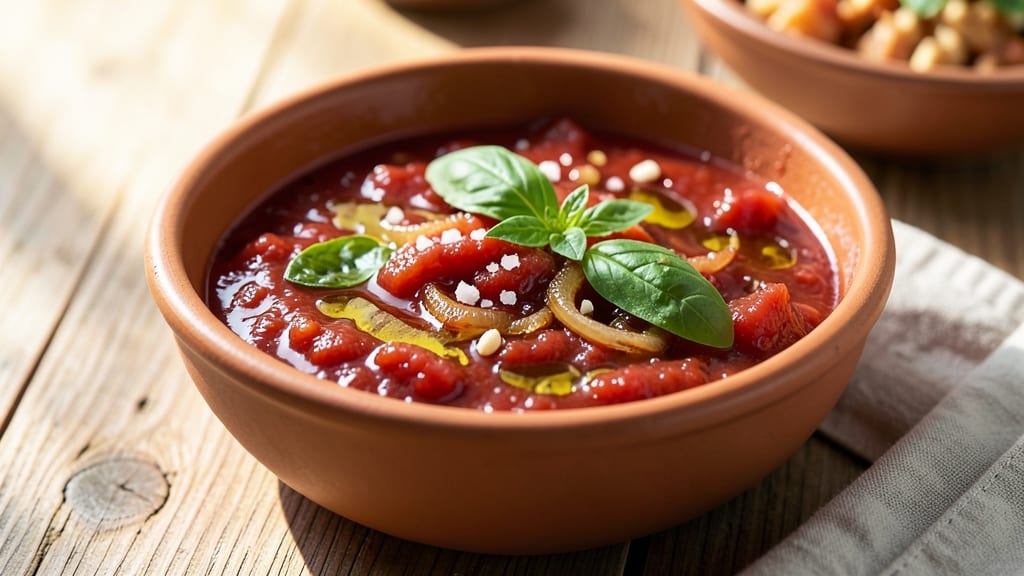
This authentic Italian red sauce recipe from scratch transforms simple ingredients into the rich, velvety base of every classic pasta dish. The secret lies in San Marzano tomatoes—sweet, low-acid varieties that simmer down to a perfectly balanced sauce without needing vinegar.
I've perfected this technique over years of testing, ensuring the sauce develops deep umami flavors while maintaining that bright, fresh tomato essence.
The process is straightforward but requires patience: garlic sautéed until fragrant, tomatoes crushed by hand (never blended), and a long, slow simmer to concentrate flavors. A touch of olive oil at the end creates a silky finish, while fresh basil added at the very end preserves its bright aroma.
This isn't just any tomato sauce—it's the foundation of Italian cooking, built layer by layer.
What you'll end up with is a sauce so rich and balanced it elevates even the simplest pasta into a restaurant-worthy meal. The texture is smooth yet vibrant, with just enough acidity to cut through the richness. Every spoonful carries the essence of Italian home cooking—simple, honest, and deeply satisfying.
This sauce keeps beautifully in the fridge for up to 5 days or freezes for 3 months, making it perfect for meal prep.
Whether you're tossing it with spaghetti, using it as a pizza base, or serving it with grilled meats, this recipe delivers authentic Italian flavor that tastes like Nonna's kitchen.
Ingredients for authentic italian red sauce recipe from scratch
Nine essential ingredients, all working together for that perfect Italian red sauce.
| Ingredient | Amount | Notes |
|---|---|---|
| San Marzano Tomatoes 🍅 | 28 oz | Whole, crushed by hand |
| Extra-Virgin Olive Oil 🫒 | ½ cup | High-quality, fruity |
| Garlic Cloves 🧄 | 4 cloves | Fresh, peeled, minced |
| Onion 🧅 | 1 whole | Yellow, finely chopped |
| Fresh Basil Leaves 🌿 | ¼ cup | Packed, torn by hand |
| Salt 🧂 | 1 ½ tsp | Diamond Crystal preferred |
| Black Pepper 🌶️ | ½ tsp | Freshly ground |
| Red Wine Vinegar 🍷 | 1 tbsp | Optional, for brightness |
| Sugar 🍚 | 1 tsp | White granulated |
San Marzano tomatoes are non-negotiable here—their sweetness and low acidity create that authentic Italian flavor. Look for canned San Marzano tomatoes at Italian markets or specialty stores like Eataly or Whole Foods. The San Marzano brand is the gold standard, but any high-quality canned tomatoes will work. Fresh basil is a must—farmers markets often have the freshest, most aromatic varieties. The garlic should be fresh, not powdered, for that deep, sweet flavor that develops during simmering. For the olive oil, Californian or Italian brands like Bertolli or Filippo Berio add extra depth.
No San Marzano tomatoes? Crushed tomatoes or tomato passata will work in a pinch, but the flavor won't be as refined. Swap fresh basil for dried at one-third the amount, but it won't have the same bright aroma. The red wine vinegar is optional but adds a nice brightness—substitute lemon juice if you're out. For the sugar, honey or maple syrup can work, but white sugar is the most neutral. If you're making this ahead, freeze the sauce in ice cube trays for easy portioning later. The onions can be swapped for shallots if you prefer a milder flavor, but yellow onions give that classic Italian depth.
This sauce develops better with time—let it simmer for at least 45 minutes for rich, concentrated flavors. Store in an airtight container in the fridge for up to 5 days or freeze for 3 months. The longer it sits, the deeper the flavors become. For a smoother texture, blend briefly at the end, but hand-crushing the tomatoes is key for that authentic rustic quality. Always add the fresh basil at the very end to preserve its vibrant aroma.
Why You'll Love This Recipe
- No-Chop Shortcut: I swear by this—just dice one onion and a few garlic cloves. That’s it. The San Marzano tomatoes do all the heavy lifting, bursting with sweetness while you sip your wine.
- Garlic-Basil Magic: Between us, this isn’t just sauce—it’s a flavor explosion. The olive oil caramelizes the garlic until it’s fragrant but not bitter, then the basil finishes it with that bright, fresh punch that makes you want to eat it by the spoonful.
- Weeknight to Dinner Party: Same recipe, endless uses. Slap it on pasta for a quick weeknight meal, or let it simmer longer for a restaurant-worthy sauce to drizzle over grilled chicken or polenta. My kids even ask for it on school nights.
- Fridge Goldmine: Here’s what sold me—this sauce tastes better the next day. Store it in jars, and suddenly you’ve got a pantry staple that’s cheaper than takeout and way healthier. Plus, the basil keeps it vibrant longer than store-bought ever could.
Step-by-step instructions for authentic Italian red sauce
Here's the method for a sauce that captures true Italian flavor—deep, balanced, and simmered just right.
Prepare the Base Ingredients
Begin by crushing the 28 oz San Marzano Tomatoes by hand—this preserves their delicate texture and flavor. I like to use my fingers to gently break them into large chunks, leaving some seeds intact for natural sweetness. Avoid over-crushing, as this releases excess liquid too early.
In a large, heavy-bottomed pot, heat the 0.5 cup Extra-Virgin Olive Oil over medium-low heat. Add the 1 whole Onion, finely chopped, and cook for 8-10 minutes until softened and translucent. This slow cooking prevents burning, which would create bitterness. Add the 4 cloves Garlic Cloves, minced, and cook for another 1 minute until fragrant but not browned—garlic burns quickly, so keep an eye on it.
Build the Sauce Foundation
Add the crushed tomatoes to the pot, along with the 1.5 tsp Salt, 0.5 tsp Black Pepper, and 1 tsp Sugar. Stir well to combine, ensuring the oil coats the tomatoes evenly. Bring the mixture to a gentle simmer over medium heat. This initial simmer helps break down the tomatoes' natural pectin, creating a smoother sauce later.
Simmer uncovered for 30 minutes, stirring occasionally. You'll notice the sauce thicken slightly and develop a rich, tomato aroma. If it reduces too quickly, add 2-3 tablespoons of water to maintain a gentle simmer. The goal is to develop deep flavor without burning the sauce.
Add Brightness and Finish
After 30 minutes, stir in the 1 tbsp Red Wine Vinegar and 0.25 cup Fresh Basil Leaves, torn by hand. The vinegar adds a bright acidity that cuts through the richness, while the basil infuses freshness. Simmer uncovered for another 20-25 minutes, until the sauce reaches your desired consistency—it should coat the back of a spoon but still be fluid enough to cling to pasta.
Taste and adjust seasoning if needed. The sauce should be balanced—sweet from the tomatoes, bright from the vinegar, and savory from the garlic and onion. If it's too acidic, add a pinch more sugar; if too mild, a splash more vinegar. Remove from heat and let it rest for 5 minutes before serving—this allows flavors to meld fully.
Pro Tips For Making Authentic Italian Red Sauce Recipe From Scratch
- Sweat, Don’t Burn, Onions: I learned this the hard way—when onions turn golden brown, they’re done. If they darken too fast, you’ve got bitterness creeping in. Keep the heat at a medium simmer, stir occasionally, and resist the urge to rush. A well-sweated onion builds flavor without overpowering the tomatoes.
- Crush Those Tomatoes: Skip the blender—your hands (or a potato masher) work best. Crushed San Marzano tomatoes release their juices and skin naturally, creating a silkier texture without needing straining. Plus, the skins add subtle depth that pureeing skips.
- Low and Slow Wins: This sauce isn’t a race. After adding tomatoes, drop the heat to a gentle simmer and let it bubble away uncovered for at least 45 minutes. That’s when the acid softens, the flavors meld, and the sauce thickens properly—no thin, watery disaster here.
- Salt the Pot, Not the Sauce: Add a generous pinch of salt to the pot of water you’ll use to blanch basil (if you do). The leaves absorb flavor instantly, and you won’t have to fuss with salting them later. (Yes, even if you’re impatient like me.)
Essential equipment for this recipe
Heavy-Bottomed Pot
You'll need a large, heavy-bottomed pot with at least 8-quart capacity—I recommend a stainless steel or enameled cast iron like All-Clad or Le Creuset Dutch oven. These materials distribute heat evenly and prevent scorching, which is critical for developing deep flavor without burning.
Avoid thin aluminum pots—they heat unevenly and can create hot spots that ruin your sauce. 🔥
Wooden Spoon
A high-quality wooden spoon (like Olive Wood or Maple) is essential for stirring during the simmer. Wood prevents scratching your pot and won't conduct heat like metal, keeping your sauce at a consistent temperature.
I've ruined sauces using metal spoons—they can cause tiny scratches that lead to discoloration and off-flavors over time.
Chef's Knife
Invest in a sharp 8-inch chef's knife (I use Wüsthof) for chopping onions and mincing garlic. A dull knife crushes garlic instead of cleanly mincing it, which leads to bitter flavors.
Keep your knife honed—Wüsthof whetstones are my go-to for maintaining that razor-sharp edge essential for precise, even cuts.
Tomato Crusher
While you can crush tomatoes by hand, a stainless steel tomato crusher (like OXO Good Grips) makes the process faster without breaking seeds. The gentle pressure preserves texture and prevents excess liquid release.
If you're making this sauce frequently, this is a game-changing tool—it saves time while maintaining authenticity.
Fine-Mesh Strainer
For when you want a smoother sauce, a fine-mesh strainer (like Hudson Fine Mesh) helps remove seeds and skins without losing flavor. I only use this occasionally—most authentic Italian sauces keep some texture for body. The strainer is especially useful if you're using lower-quality tomatoes that need extra refinement.
Measuring Spoons
Precision matters with small ingredients like salt, pepper, and sugar. Use stainless steel measuring spoons (I prefer OXO Good Grips) for accurate measurements. These are durable, easy to clean, and won't rust like cheap plastic alternatives. Remember: 1 tsp too much salt can ruin an otherwise perfect sauce.
Nutrition facts
Frequently asked questions
Why do I need San Marzano tomatoes for authentic Italian red sauce?
San Marzano tomatoes are the gold standard because their sweet, low-acid profile creates a naturally balanced sauce without needing extra vinegar or sugar. Their thick flesh and minimal seeds also prevent excess liquid release during simmering. For the most authentic flavor, these canned tomatoes are non-negotiable in traditional Italian recipes.
Can I make this sauce without fresh basil?
Yes, but the flavor won't be as bright. Use 1 tablespoon dried basil instead, but add it 10 minutes earlier during simmering. For extra depth, try 1 teaspoon dried oregano along with the basil. The key is adding aromatic herbs at the right time to preserve their freshness.
How do I know when the sauce is ready?
The sauce is done when it coats the back of a spoon smoothly but still has some body—about 55-60 minutes total simmering time. It should smell rich and aromatic, with no raw tomato taste. Taste it: the acidity should be balanced with sweetness, and the flavors should meld harmoniously. If it's too thin, simmer uncovered longer.
What's the best way to store leftover sauce?
Let the sauce cool completely, then transfer to airtight containers. It keeps in the fridge for 5 days or freezes for 3 months. For freezing, use ice cube trays for portion control—just thaw and heat gently. The flavors actually improve over time, developing deeper complexity when stored properly.
Can I make this sauce in a slow cooker?
Yes! Follow the same steps but transfer everything to a 6-quart slow cooker after the initial onion and garlic cooking. Cook on low for 6-8 hours or high for 3-4 hours. The slow cooker's gentle heat enhances the tomatoes' natural sweetness while preventing burning. Just stir occasionally and adjust seasoning at the end.