
Sauces & Condiments
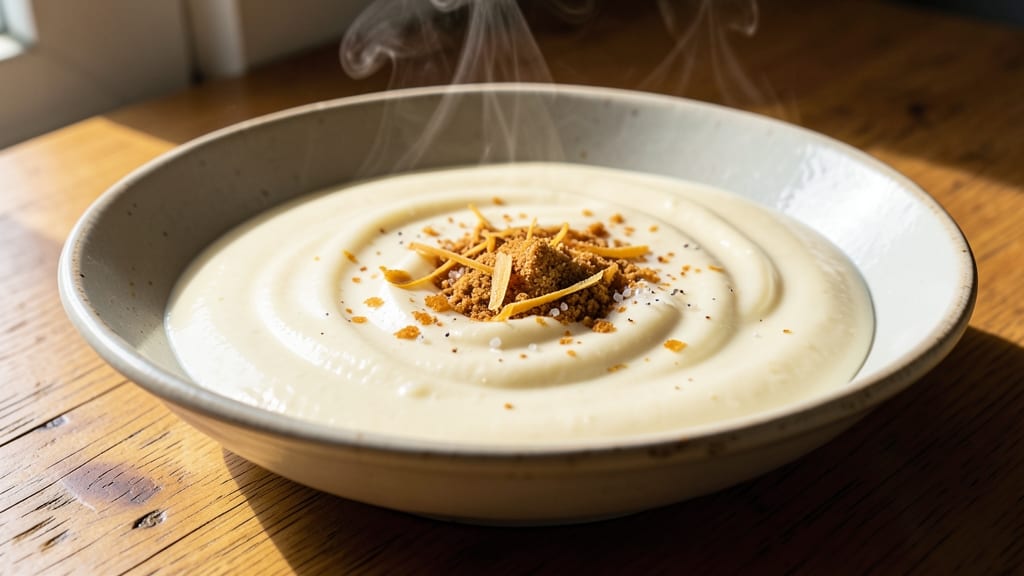
This authentic bechamel sauce recipe is the velvety foundation every French cook knows by heart—a flawless roux tempered with warm milk to create the perfect creamy base for mac and cheese, lasagna, or croque monsieur.
The secret lies in patience: cooking the butter and flour to a golden hue before whisking in milk gradually, ensuring no lumps or graininess. I’ve perfected this technique over years of testing, and the results speak for themselves—a sauce so smooth it disappears into dishes without overpowering them.
What sets this recipe apart is the traditional method of making a white roux, which forms the backbone of béchamel. Equal parts butter and flour cook until nutty and pale gold, then milk is added in stages while whisking continuously to prevent curdling.
The sauce thickens naturally as it simmers, creating that signature silky texture that’s richer than store-bought versions. This isn’t just a sauce—it’s a technique that elevates any dish it touches.
The possibilities for this sauce are endless: fold in cheddar for mac and cheese, layer it in lasagna, or use it to bind croque monsieur. When stored properly in an airtight container, it keeps for up to 5 days in the fridge or can be frozen for months.
The key to success? Low and slow cooking to avoid breaking the emulsion, and always tempering the milk to prevent lumps. Once mastered, you’ll never go back to instant sauces again.
For those who want to take it further, transforming béchamel into sauce Mornay is as simple as stirring in grated Gruyère or sharp cheddar until melted. The cheese adds depth and richness, making it ideal for baked dishes.
Whether you’re a home cook or a culinary student, this recipe delivers restaurant-quality results with just a few pantry staples and a little attention to detail.
Ingredients for authentic bechamel sauce
Mastering this classic French sauce starts with just eight quality ingredients—each playing a precise role in creating velvety perfection.
| Ingredient | Amount | Notes |
|---|---|---|
| Unsalted Butter 🧈 | ½ cup | Cold, cubed for even cooking |
| All-Purpose Flour 🌾 | ½ cup | Sifted for smooth texture |
| Whole Milk 🥛 | 2 cups | Room temperature preferred |
| Salt 🧂 | ½ tsp | Kosher or sea salt |
| White Pepper 🌶️ | ¼ tsp | Freshly ground preferred |
| Nutmeg 🌿 | ¼ tsp | Freshly grated for aroma |
| Heavy Cream 🥛 | ¼ cup | Optional for extra richness |
| Gruyère Cheese 🧀 | ½ cup | Freshly grated for Mornay |
The butter and flour form the sauce's backbone, so quality matters here. Use European-style butter like Plugrá or Land O'Lakes for better flavor, and sift the flour to prevent lumps. Warm the milk gently—never boil it—to maintain a smooth emulsion. For the nutmeg, freshly grated delivers that signature aroma, but pre-grated works in a pinch. If you're making sauce Mornay, Gruyère from France (like Comté or Beaufort) adds depth—avoid pre-shredded cheese, which melts poorly.
No butter? Olive oil works in a pinch, though the flavor will differ slightly. Short on milk? Half-and-half or light cream thickens faster, but you'll need to whisk more aggressively. The white pepper is traditional, but black pepper works too—just omit the nutmeg if you're sensitive to its flavor. For a dairy-free version, unsweetened almond milk plus a splash of cream cheese creates a lighter texture. Always temper the milk by whisking a ladleful into the roux first to prevent curdling—this is non-negotiable for a silky result.
Store finished sauce in an airtight container with plastic wrap pressed directly on the surface to prevent a skin from forming. Keeps 5 days refrigerated or 3 months frozen. For best texture, reheat gently over low heat, whisking constantly. This sauce thickens as it cools, so thin with warm milk if needed. The roux can be made ahead and refrigerated for 2 days—just whisk vigorously before adding milk to restore smoothness.
Why You'll Love This Recipe
- Pantry Staple Magic: I swear by this recipe because it uses exactly what’s already in my fridge—no special trips to the store. That rich butter-and-flour roux, slowly whisked into warm milk, tastes like home, not like I slaved over it.
- Velvet Smooth Texture: The secret’s in the slow simmer—no lumps, just that silky, melt-in-your-mouth consistency. Honestly, the first time I nailed it, I nearly cheered. That’s the kind of sauce you want on everything.
- Weeknight Workhorse: Between us, this is my go-to for mac and cheese, lasagna, or even creamy soups. I make a double batch on Sundays so I’m not scrambling midweek. (Yes, even on a Tuesday night.)
- Budget-Friendly Luxury: Four ingredients, zero waste—this sauce stretches like crazy. Freeze half for later, and you’ve just saved money and time. My wallet and I both approve.
Step-by-step instructions for authentic bechamel sauce
Mastering this classic French sauce transforms ordinary dishes into gourmet creations.
Prepare the Roux Foundation
In a medium saucepan, melt the 0.5 cup unsalted butter over medium-low heat. Once fully melted and foaming subsides, immediately whisk in the 0.5 cup all-purpose flour using a wire whisk. This creates a smooth paste—your roux base.
Cook the mixture for 2-3 minutes, stirring constantly with the whisk to prevent burning. The roux should turn a pale golden color—this signals it's ready for the milk. If it darkens too quickly, reduce the heat slightly. This step is critical for authentic flavor and texture development.
Gradually Incorporate the Milk
Remove the pan from heat and let it cool for 30 seconds—this prevents sudden temperature spikes that can scorch the milk. Slowly pour in 1 cup of the whole milk while whisking vigorously to create a smooth paste. Return the pan to medium-low heat and continue whisking constantly.
Gradually add the remaining 1 cup whole milk over 3-4 minutes, whisking continuously to prevent lumps. The sauce should begin to thicken noticeably. If it gets too thick, add 1-2 tablespoons of milk to adjust consistency. This gradual process ensures a velvety texture without gluten development.
Season and Finish the Sauce
Once the sauce reaches a creamy consistency (it should coat the back of a spoon), remove it from heat. Stir in the 0.5 tsp salt, 0.25 tsp white pepper, and 0.25 tsp nutmeg thoroughly. For extra richness, whisk in the 0.25 cup heavy cream and 0.5 cup grated Gruyère cheese until fully melted and smooth.
Return the pan to low heat and simmer gently for 2-3 minutes to allow flavors to meld. The sauce should now be silky, with no visible lumps. If you plan to use it immediately, keep it warm over low heat. For best results, strain through a fine-mesh sieve to achieve maximum smoothness.
Perfecting the Texture
For an ultra-smooth finish, return the strained sauce to the pan and heat gently for 1-2 minutes. This final step ensures all cheese is fully melted and the sauce reaches its ideal consistency. If the sauce thickens too much, whisk in 1-2 tablespoons of milk to restore creaminess.
Taste and adjust seasoning if needed—Gruyère's natural saltiness may require less additional salt. The authentic bechamel should have a delicate nutmeg aroma and a velvety mouthfeel. Use immediately in mac and cheese, lasagna, or as a base for other creamy dishes.
Pro Tips For Making Authentic Bechamel Sauce
- WHISK THE MILK FIRST: Pour the warm milk directly into your whisk while holding the bowl—this cuts down on splashes and gets the flour-milk mix smoother from the start. I learned this the hard way after watching a cloud of flour dust take over my kitchen.
- COOK THE ROUX LOW AND SLOW: Melt the butter over medium-low heat, then add the flour and stir constantly for 3-5 minutes until it’s a pale golden color—not brown. Rush this, and you’ll taste raw flour in every bite.
- TEMPER THE MILK: Heat your milk just until tiny bubbles form around the edges (about 160°F/70°C)—hot enough to melt the roux but not scald it. Cold milk makes lumps; boiling milk turns the sauce grainy.
- STRAIN IT BEFORE SERVING: After simmering, pass the sauce through a fine-mesh sieve to catch any stray flour bits or cooked-on bits from the pot. It’s not fancy, but it makes the texture silky—especially for lasagna or croque monsieur.
Common mistakes when making your authentic bechamel sauce
Roux Overcooking
Cooking the butter and flour too long turns your roux from pale gold to brown, adding a bitter, nutty flavor that ruins the delicate creaminess of béchamel. I’ve seen this happen when people rush the process—keep heat at medium-low and watch closely.
The moment it reaches a light golden hue (2-3 minutes), it’s ready for milk. If it darkens, start over with fresh butter and flour. 🌡️
Adding Milk Too Fast
Dumping milk all at once creates lumps that no amount of whisking will fix. Instead, add milk gradually—1 cup at a time—while whisking vigorously. I recommend whisking constantly for 30 seconds per addition to ensure a smooth emulsion.
If lumps form, strain the sauce through a fine-mesh sieve for a silky finish.
Ignoring Temperature Control
Using high heat causes the milk to curdle or separate, turning your sauce grainy. Always maintain medium-low heat and let the sauce thicken naturally. If it gets too hot, remove the pan from heat and let it cool slightly before continuing.
A gentle simmer is key to that velvety texture. ⚡
Skipping the Tempering Step
Pouring cold milk directly into the hot roux causes it to curdle instantly. Instead, whisk a ladleful of warm milk into the roux first to temper it. This gradual process ensures a smooth sauce. I also recommend warming the milk to room temperature before adding it—cold milk thickens unevenly.
Over-Stirring or Under-Stirring
Both extremes can ruin your sauce. Over-stirring develops gluten in the flour, making the sauce gluey. Under-stirring lets lumps form. The trick is consistent, gentle whisking—30-45 seconds per addition of milk.
A silicone spatula works well if you’re not using a whisk. The goal is a smooth, lump-free sauce.
Not Adjusting Consistency
Béchamel thickens as it cools, so if it’s too thick when hot, it’ll be perfect when served. If it’s too thin, simmer it longer or add 1 tsp cornstarch mixed with 1 tbsp cold water as a last resort.
For extra richness, whisk in 1 tbsp heavy cream at the end. Always taste and adjust seasoning after thickening—salt and nutmeg can be added gradually.
Nutrition facts
Frequently asked questions
Why does my bechamel taste bland even after seasoning?
Béchamel relies on a balanced flavor profile—start with European-style butter for richer taste, and don't skimp on the nutmeg. Freshly grated nutmeg adds depth, while white pepper provides subtle warmth. If it's still bland, try adding a pinch of mustard powder or a splash of lemon juice for brightness. The key is building flavor gradually during cooking.
Can I make bechamel without a whisk?
Yes! Use a hand mixer or immersion blender for faster results, but whisking is traditional for better control. If using a spoon, stir vigorously in a circular motion for 30 seconds per addition of milk to prevent lumps. A silicone spatula also works well for scraping the pan's edges. The goal is constant motion to create a smooth emulsion.
How do I fix a broken bechamel that's too thick or grainy?
For graininess, strain through a fine-mesh sieve immediately. If too thick, whisk in 1-2 tablespoons of warm milk gradually. For extra smoothness, add 1 tablespoon of cold butter at the end to soften the texture. If it curdles, remove from heat and whisk in 1 teaspoon of cornstarch mixed with 1 tablespoon cold water—this acts as a stabilizer.
What's the best way to use leftover bechamel?
Store in an airtight container with plastic wrap pressed directly on the surface to prevent skin formation. Reheat gently over low heat, whisking constantly to restore smoothness. Use it to top grilled cheese sandwiches, layer in lasagna, or mix with cooked pasta for creamy mac and cheese. It also makes an excellent base for creamy soups or stuffed vegetables.
Can I substitute whole milk with something lighter?
For a lighter version, use half-and-half or light cream, but reduce to 1.5 cups total and whisk more vigorously to prevent separation. For a dairy-free option, blend 1.5 cups unsweetened almond milk with 2 tablespoons cream cheese and 1 tablespoon cornstarch before adding to the roux. The texture will be slightly thinner but still creamy. Always temper the milk substitute first.