
Sauces & Condiments
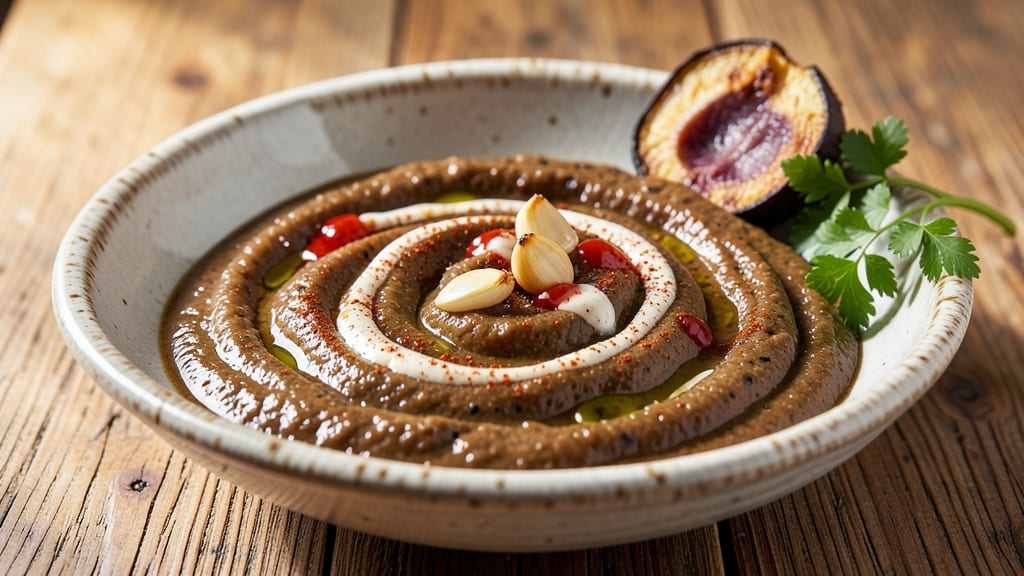
This aubergine sauce recipe transforms humble eggplant into a velvety, smoky masterpiece that elevates any dish. 💛 The secret lies in slow-roasting whole eggplants until their flesh collapses into a silky, umami-rich purée—no food processor required.
I developed this version after years of testing, balancing sweetness, saltiness, and that signature Mediterranean depth that makes it irresistible.
The process is simpler than it sounds: char the eggplants over an open flame or under a broiler, then scoop out the flesh while still warm. Blend it with garlic, lemon juice, and olive oil until completely smooth, then finish with tahini and smoked paprika for that authentic restaurant-quality flavor.
The sauce thickens beautifully as it cools, creating a perfect consistency for spreading or drizzling.
What you'll end up with is a sauce so rich and complex it works as a dip, pasta topping, or even a sandwich spread. The smoky char from roasting adds depth that store-bought versions can't match, while the tahini gives it that signature nutty richness.
It keeps well in the fridge for up to 5 days, making it perfect for meal prep.
Serve it warm over grilled meats, cool as a dip with pita chips, or use it to elevate simple dishes like toast or scrambled eggs. The possibilities are endless, but the technique remains the same—slow, smoky roasting is the key to unlocking eggplant's full potential.
Ingredients for aubergine sauce
Eight essential ingredients transform roasted eggplant into a restaurant-quality sauce with smoky depth and umami richness.
| Ingredient | Amount | Notes |
|---|---|---|
| Eggplants 🍆 | 2 whole | Medium-sized, organic preferred |
| Extra-Virgin Olive Oil 🫒 | ½ cup | High-quality, fruity variety |
| Garlic Cloves 🧄 | 4 cloves | Freshly peeled, roasted with eggplant |
| Fresh Lemon Juice 🍋 | 2 tbsp | Bright, freshly squeezed |
| Tahini 🥜 | ¼ cup | Sesame paste, unsweetened |
| Smoked Paprika 🌶️ | 1 tsp | For authentic smoky depth |
| Sea Salt 🧂 | 1 tsp | Diamond Crystal preferred |
| Black Pepper 🌶️ | ½ tsp | Freshly cracked |
| Water 💧 | ¼ cup | For blending consistency |
The eggplants are the foundation—select firm, glossy-skinned varieties for maximum flavor. Whole Foods Market or Trader Joe's carry excellent organic options, but any medium-sized eggplant works. The key is roasting them whole until completely charred; this caramelizes their natural sugars while creating that signature smoky flavor. For best results, use a grill or broiler—gas flames add extra char. The garlic should be roasted alongside the eggplants to mellow its sharpness and deepen the sauce's complexity. If you're short on time, a high-heat broiler works just as well, though it requires closer attention to prevent burning.
No tahini? Substitute with equal parts peanut butter or almond butter, though the flavor profile will shift slightly. Fresh lemon juice can be replaced with bottled lemon juice at half the amount, but freshly squeezed delivers brighter acidity. For extra richness, add 1 tbsp of heavy cream or coconut milk to the finished sauce. The smoked paprika is non-negotiable for that authentic Mediterranean touch—Penzeys brand is my go-to for consistent quality. If you prefer a milder heat, reduce to 0.5 tsp and add an extra pinch of sweet paprika for balance. The olive oil should be high-quality; California Extra Virgin brands like Corto or Colavita elevate the sauce's depth.
This sauce thickens as it cools, creating the perfect consistency for spreading or drizzling. Store in an airtight container in the refrigerator for up to 5 days, with a thin layer of olive oil on top to preserve freshness. For longer storage, freeze in ice cube trays—thaw overnight in the fridge before using. The sauce reheats beautifully; simply warm it gently on the stove with a splash of water to restore its silky texture. Portion into small containers for easy meal prep, and always taste before serving—adjust salt and lemon as needed. The flavors deepen over time, making it even more irresistible the next day.
Why You'll Love This Recipe
- No-Fuss Roast: I just toss eggplant halves in olive oil, roast them until tender, then blend—no peeling, no fuss. That smoky, caramelized flavor from the oven? It’s the secret weapon here.
- Tahini Magic: The nutty richness of tahini mixed with lemon juice gives this sauce a depth that’s hard to beat. It’s creamy but bright, with that little zing that makes you reach for more.
- Dinner Party Ready: Slather it on grilled fish, drizzle over couscous, or serve it with warm pita—this sauce works for casual weeknights or when unexpected guests show up. (Yes, even on a Tuesday night.)
- Budget-Friendly Staple: Eggplants are cheap, tahini lasts forever, and a batch keeps for days in the fridge. I make it twice a month—once for leftovers, once because I just can’t resist.
Step-by-step instructions for smoky roasted eggplant sauce
Master this technique for velvety depth and complex flavor in every spoonful.
🔥 Step 1: Roast Eggplants Until Charred and Tender
Preheat your oven to 425°F and line a baking sheet with parchment paper. Halve the 2 whole eggplants lengthwise and place them cut-side down on the prepared sheet. Brush the cut sides generously with ½ cup extra-virgin olive oil, ensuring complete coverage—this creates a protective barrier that prevents bitterness and promotes caramelization.
Roast for 30-35 minutes until the edges are deeply charred and the flesh yields easily when pierced with a fork. Rotate the baking sheet halfway through for even browning. The eggplants should collapse slightly and develop a rich, smoky aroma. This roasting process transforms their texture from watery to silky while developing deep, caramelized flavors.
🍳 Step 2: Roast Garlic and Prepare the Base
While the eggplants roast, place the 4 cloves garlic directly on the baking sheet (no oil needed) and roast for 10-12 minutes until golden brown and fragrant. The garlic should soften and develop a sweet, nutty aroma—this is your flavor foundation. Let it cool slightly before handling.
Transfer the roasted eggplants to a cutting board and scoop out the flesh, discarding the skins. Place the flesh in a food processor along with the roasted garlic cloves. This is where the magic begins—the charred eggplant and sweet garlic create an incredible umami base for your sauce.
🥘 Step 3: Blend with Tahini and Seasonings
Add ½ cup water to the food processor and pulse until the mixture is smooth but still slightly textured. With the processor running, slowly drizzle in ½ cup extra-virgin olive oil to create an emulsion. This step is critical—adding oil too quickly can cause separation. The sauce should begin to thicken and develop a creamy consistency.
Add ¼ cup tahini, 1 teaspoon smoked paprika, 1 teaspoon sea salt, and ½ teaspoon black pepper to the processor. Blend again until completely smooth. The tahini adds richness while the smoked paprika deepens the flavor profile. Taste and adjust seasoning—this is where you can fine-tune the balance between smoky, sweet, and savory.
🍋 Step 4: Finish with Brightness and Texture
Transfer the sauce to a saucepan and place over low heat. Stir in the 2 tablespoons fresh lemon juice and simmer gently for 5-7 minutes, stirring occasionally. The lemon juice brightens the deep flavors and prevents the sauce from becoming too heavy. You're looking for a sauce that coats the back of a spoon but still has a pleasant sheen.
For optimal texture, let the sauce cool to room temperature before serving. This allows the flavors to meld completely and the sauce to reach its ideal consistency. The final product should be velvety with a subtle sheen, perfectly balanced between smoky, sweet, and tangy notes. This sauce pairs beautifully with grilled meats, roasted vegetables, or as a dip for warm pita bread.
Pro Tips For Making Aubergine Sauce
- CHAR THE EGGPLANTS: Cut them into 1-inch chunks, then toss in a bowl with 1 tablespoon of salt and let sit for 20 minutes—this draws out the bitterness and keeps the sauce from tasting like a rubbery nightmare. Drain well, but don’t rinse; pat dry with a towel afterward.
- COOK LOW AND SLOW: After draining, sear the eggplant in olive oil over medium heat until golden, then drop the heat to low and let it cook for 10-12 minutes. I used to rush this, and the sauce ended up watery—patience here makes all the difference.
- GARLIC: MINCE, DON’T CHOP: Tiny, even slices of garlic cook faster and burn less, so the sauce doesn’t turn bitter. If you’re lazy like me, smash the cloves with the flat side of your knife first—it saves time and keeps the flavor consistent.
- LEMON AND TAHINI FIRST: Whisk the tahini with lemon juice before adding the cooked eggplant—this prevents clumping and gives the sauce a silky texture. Start with 1 tablespoon of lemon, then adjust; too much makes the tahini curdle.
Wine and beer pairings for this dish
Mediterranean Whites
This sauce shines with crisp, mineral-driven white wines like Greek Assyrtiko or Italian Vermentino—their bright acidity cuts through the richness while complementing the smoky eggplant notes.
I always reach for a Santorini Assyrtiko from Gaia Wines—its citrus and saline finish mirrors the lemon and olive oil in the sauce. Serve slightly chilled to enhance the wine's refreshing qualities. 🍷
Bold Reds for Contrast
For red wine lovers, a Syrah or Monastrell from Spain's Jumilla region brings enough structure to stand up to the sauce's depth. The dark fruit and peppery notes in these wines echo the smoked paprika and black pepper in the recipe.
A 2018 Bodegas Juan Gil Monastrell pairs beautifully—its earthy undertones enhance the eggplant's charred character.
Beer Pairings
A Belgian witbier like Stella Artois Wit or Hoegaarden adds effervescence that cleanses the palate between bites. The coriander and orange peel notes in these beers complement the sauce's smoky-sweet profile.
For a heavier option, try a German Helles Lager—its malty backbone balances the sauce's richness without overpowering it. 🍺
Non-Alcoholic Options
For a refreshing non-alcoholic match, serve with sparkling water infused with cucumber and mint. The crispness enhances the sauce's smoky depth, while the herbs add a fresh contrast.
Alternatively, a cold Turkish Ayran (yogurt drink) with a pinch of salt creates a creamy, cooling balance that's perfect for dipping pita bread.
Wine Serving Tips
Always serve white wine slightly chilled at 45-50°F to preserve its crispness. For reds, decant for 30 minutes to soften tannins and let the wine breathe. When pairing with beer, opt for amber glassware to highlight the sauce's rich colors.
I like to serve the sauce in small bowls with warm pita triangles on the side—it makes for an elegant yet casual presentation.
Nutrition facts
Frequently asked questions
Can I use store-bought eggplant instead of fresh?
Fresh eggplant works best for this recipe because it has the right texture and flavor profile. Canned or pre-cooked eggplant often contains excess water and lacks the smoky depth from roasting whole. If you must use canned, drain it thoroughly, pat dry, and roast it for an extra 10 minutes to remove moisture before blending.
How can I make this sauce thicker or thinner?
For a thicker sauce, simmer it uncovered for 5-7 minutes to evaporate excess moisture. To thin it, add 1-2 tablespoons water or extra-virgin olive oil while blending. The sauce naturally thickens as it cools, so always taste and adjust before serving.
What are the best ways to serve this eggplant sauce?
This versatile sauce works as a dip with warm pita chips, a spread for toast or bruschetta, or a drizzle over grilled meats and roasted vegetables. For extra flair, garnish with fresh parsley, a drizzle of olive oil, or a sprinkle of smoked paprika before serving.
Can I make this sauce ahead of time?
Yes! This sauce actually tastes better the next day as flavors meld. Store in an airtight container in the fridge for up to 5 days. For longer storage, freeze in ice cube trays—thaw overnight in the fridge before using. Always stir well before serving.
What if my sauce tastes too bitter?
Bitter flavor usually means the eggplant wasn't roasted enough or had too much skin. Next time, roast until completely charred and scoop out all flesh carefully. To fix it, stir in 1 extra tablespoon lemon juice or a pinch of sugar while warming. The acidity will balance any bitterness.