
Sauces & Condiments
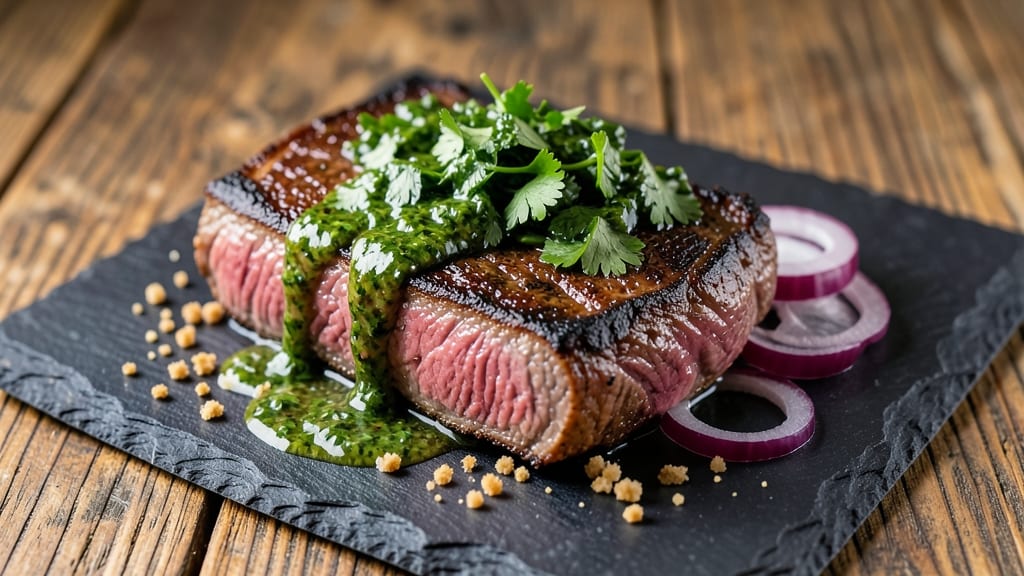
Argentinian steak with chimichurri sauce delivers the kind of bold, herbaceous fire that transforms a simple cut into a restaurant-worthy experience. The secret lies in perfectly seared steak paired with fresh, vibrant chimichurri—a bright green sauce that cuts through rich meat with its tangy, garlicky punch. I've perfected this dish over years of grilling, and it never fails to impress, whether you're cooking for two or a crowd.
This recipe focuses on two essential components: the steak and the sauce. For the steak, we'll use a simple yet effective technique—high-heat searing followed by a quick rest—to lock in juices and achieve that ideal medium-rare finish.
Meanwhile, the chimichurri comes together in minutes with just a handful of fresh herbs, garlic, olive oil, and red wine vinegar, creating a sauce that's as beautiful as it is flavorful.
What you'll end up with is a plate that looks as impressive as it tastes: perfectly seared steak with a glossy, vibrant chimichurri drizzled generously on top. The sauce's bright acidity balances the richness of the meat, while the herbs add a fresh, aromatic finish.
Serve it with grilled vegetables or crusty bread to soak up every last drop of that bold, herby goodness.
The best part? This dish is versatile enough for weeknight dinners or special occasions, yet simple enough to prepare in under an hour. Let's get started on creating a meal that tastes like a trip to Buenos Aires, right in your own kitchen.
Ingredients for argentinian steak with chimichurri sauce
Fresh herbs and bold spices meet perfectly seared steak for an Argentinian feast.
| Ingredient | Amount | Notes |
|---|---|---|
| Ribeye Steak 🥩 | 1 ½ lb | 1-inch thick, room temperature |
| Kosher Salt 🧂 | 1 ½ tbsp | Diamond Crystal preferred |
| Freshly Ground Black Pepper 🌶️ | 1 tsp | Coarse grind for texture |
| Extra-Virgin Olive Oil 🫒 | 2 tbsp | High-quality, fruity variety |
| Fresh Parsley Leaves 🌿 | 1 cup | Stems removed, tightly packed |
| Fresh Cilantro Leaves 🌿 | ½ cup | Stems removed, tightly packed |
| Garlic Cloves 🧄 | 6 cloves | Peeled, roughly chopped |
| Red Wine Vinegar 🍷 | ¼ cup | Aged, not balsamic |
| Red Pepper Flakes 🌶️ | ½ tsp | Adjust for heat preference |
| Ground Cumin 🌿 | ¼ tsp | Toasted for deeper flavor |
| Lemon Juice 🍋 | 1 tbsp | Freshly squeezed |
The steak is where this dish shines—ribeye delivers the best marbling and flavor. Look for cuts with good fat distribution, and room temperature is key before cooking. I always grab mine from Whole Foods or my local butcher—they cut it perfectly. For the chimichurri, fresh herbs are non-negotiable—the sauce loses its vibrancy with dried substitutes. If you can't find cilantro, parsley alone works, but the combo is what makes it authentic. The garlic? Toast the cloves first—just 30 seconds in a dry pan—it mellows the raw bite and adds depth.
No fresh parsley? Cilantro alone works in a pinch, though it'll taste different. Short on red wine vinegar? Balsamic vinegar at half the amount gives a similar tang, but the color won't be as bright. The cumin is optional but adds that signature earthy note—skip it if you're sensitive to spice. For the steak, kosher salt is a must—it dissolves better than table salt. And if you're worried about the heat, start with less red pepper flakes—you can always add more. The chimichurri keeps well, so double the recipe if you're serving a crowd.
Steak rests best at room temperature for 30 minutes before cooking—don't skip this. The chimichurri sauce stays fresh for 5 days in the fridge, sealed tightly with a layer of olive oil on top. For leftovers, reheat gently in a pan with a splash of water to keep it vibrant. Freezing isn't recommended—the herbs get mushy. If you're prepping ahead, make the chimichurri the night before and let the flavors meld. The steak? Cook it fresh—nothing beats the sizzle of a hot grill or skillet.
Why You'll Love This Recipe
- Two-Handed Prep: I swear by this—just salt, pepper, and a quick sear in olive oil while you chop parsley. No fancy marinades, no waiting hours. The steak hits the pan while you make the chimichurri, and honestly? That’s all the time I’ve got on a weeknight.
- Herb Bomb Flavor: That bright green chimichurri—just parsley, garlic, and olive oil—cuts through the richness of the ribeye like a cool breeze. The first bite? Crispy crust, juicy meat, and a herbal punch that makes you reach for seconds without thinking.
- Date Night or Dinner Party: Throw this on the table for a crowd, and you’ll look like a pro. The chimichurri’s vibrant color makes it feel fancy, but the steak’s simplicity means you’re not stuck in the kitchen. Between us, it’s my go-to for birthdays and “I actually want to impress someone” nights.
- Steak for Days: Cook one big ribeye, slice it thin, and suddenly you’ve got lunch for three days. The chimichurri keeps well too—just store it separately and toss it on anything. My freezer’s full of these leftovers, and I don’t even mind reheating it because it’s that good.
Step-by-step instructions for Argentinian steak with chimichurri sauce
Here's how to transform a simple ribeye into restaurant-quality perfection paired with vibrant chimichurri.
Season and Rest the Steak for Maximum Flavor
Remove the 1.5 lb ribeye steak from the refrigerator and pat it completely dry with paper towels. I can't stress this enough—dry meat sears beautifully while wet meat just steams. Place the steak on a cutting board and generously rub all sides with the 1.5 tbsp kosher salt and 1 tsp freshly ground black pepper. Press the seasoning into the meat so it adheres evenly.
Let the steak sit at room temperature for 30-45 minutes while you prepare everything else. This crucial step ensures even cooking throughout. I like to place it on a wire rack over a plate to catch any drippings. The steak should reach about 60°F before cooking—you'll know it's ready when it feels cool to the touch but not icy.
Sear the Steak to Perfection
Heat a heavy skillet over high heat until it's screaming hot—you should see a shimmer of smoke when you hold your hand about 1 inch above it. Add 1 tbsp of the extra-virgin olive oil and let it get very hot. Place the steak in the pan and let it sit undisturbed for 2-3 minutes on one side. You'll hear a satisfying sizzle and see the edges start to brown—that's your signal to flip.
Flip the steak and add the remaining 1 tbsp olive oil to the pan. Cook for another 2-3 minutes on the second side, then reduce heat to medium-high and cook for an additional 1-2 minutes per side for medium-rare (about 125-130°F internal temperature). For thicker cuts, you can add 1-2 minutes to each side. The key is to let the steak develop a deep crust while keeping the inside tender.
Prepare the Chimichurri Sauce
While the steak rests, combine the 1 cup fresh parsley leaves, 0.5 cup fresh cilantro leaves, 6 cloves garlic cloves, 0.25 cup red wine vinegar, 0.5 tsp red pepper flakes, 0.25 tsp ground cumin, and 1 tbsp lemon juice in a food processor. Pulse until the herbs are finely chopped but still retain some texture—you want a chunky, vibrant sauce, not a smooth paste.
With the processor running, slowly drizzle in the remaining 1 tbsp extra-virgin olive oil until the mixture comes together. Taste and adjust seasoning—you might want to add a pinch more salt or a splash more vinegar to balance the flavors. The sauce should be bright green, tangy, and just slightly spicy. Transfer it to a bowl and let it sit while the steak rests.
Rest and Slice the Steak
Transfer the seared steak to a cutting board and let it rest for 10-15 minutes. This is where the magic happens—the juices redistribute throughout the meat instead of pooling on the cutting board. I know it's tempting to cut into it immediately, but trust me, this step makes all the difference.
Use a sharp carving knife to slice the steak against the grain into ¼-inch thick slices. Arrange the slices on a warm platter and spoon the chimichurri sauce generously over the top. The contrast of the warm, juicy steak with the bright, herby chimichurri is what makes this dish truly special. Serve immediately with crusty bread and a simple green salad to let the flavors shine.
Pro Tips For Making Argentinian Steak With Chimichurri Sauce
- SEAR HOT AND FAST: High heat is non-negotiable for that perfect crust—no lingering over the steak. I used to hover, checking for doneness too soon, and ended up with gray, sad edges. Crank the heat to max, add oil, and let the ribeye sizzle undisturbed for 2-3 minutes per side before touching it.
- DRY THE STEAK LIKE IT’S SNOW DAY: Pat that ribeye down with paper towels until it’s drier than your last winter coat. Moisture is the enemy of a good sear—it’ll steam instead of brown. I skip this sometimes, and the crust suffers. Trust me, it’s worth the extra 30 seconds.
- STOP WHEN IT’S 5 DEGREES SHORT: Pull the steak off the heat when it’s still slightly firm—about 125°F for medium-rare. It’ll climb another 5-10 degrees while resting, and that’s where the magic happens. I’ve learned the hard way: overcooking turns tender ribeye into shoe leather.
- STORE CHIMICHURRI IN OIL: Mix the parsley, garlic, and vinegar first, then slowly drizzle in the olive oil—it emulsifies better and keeps the sauce fresh for days. I used to store it in a jar without oil, and it’d turn into a sad, wilted mess. A splash of oil preserves the color and flavor like nothing else.
Essential equipment for argentinian steak with chimichurri sauce
Skillet Essentials
A heavy cast-iron skillet like the Lodge Pre-Seasoned 10.25-Inch is my go-to for searing steak—it retains heat beautifully and develops a perfect crust. If you don’t own one, a stainless steel skillet (like All-Clad Stainless) works too, but preheat it for 5-10 minutes longer to reach the same temperature.
For extra insurance, I toss a meat thermometer (I love the Thermoworks Smoke) into my shopping cart—it’s a game-changer for hitting 125-130°F internal temp every time. 🌡️
Chimichurri Tools
For the chimichurri, a food processor (like the Ninja BN601) is ideal, but a sharp chef’s knife and cutting board work in a pinch—just finely chop the herbs by hand. A mortar and pestle adds rustic texture if you’re feeling traditional.
Store your finished sauce in a glass jar with a tight-sealing lid, topped with a thin layer of olive oil to preserve freshness for up to 5 days. I also keep a small whisk handy for quick adjustments if I need to tweak the sauce’s consistency mid-cook.
Grill Gear
If you’re grilling, a charcoal chimney starter (like the Weber Original) and long-handled tongs (I use Weber Originals) are must-haves for even heat distribution. For gas grills, a heat-resistant glove (like Grillaholics) protects your hands from the searing surface.
Pro tip: I always keep a small spray bottle with water nearby to control flare-ups—just a quick spray keeps things under control without ruining the crust. 🔥
Resting & Serving
A wire cooling rack (like the OXO Good Grips) keeps your steak elevated while it rests, preventing soggy slices. For serving, I love a wooden cutting board (like John Boos)—it’s sturdy and adds to the rustic vibe.
Pair it with a sharp carving knife (I swear by the Wüsthof Ikon) to slice against the grain effortlessly. Don’t forget a tongs set (like Victorinox) for serving—it’s more sanitary than forks and keeps the presentation clean.
Backup Supplies
Always have extra paper towels on hand for patting down the steak and mopping up the skillet. A small bowl for mixing chimichurri ingredients and a measuring spoon set (like OXO Stainless Steel) ensure precise seasoning.
For leftovers, airtight containers (I use Glasslock) keep the chimichurri fresh for days. And if you’re grilling outside, a portable meat thermometer (like Meater) lets you monitor the steak’s temp without opening the grill lid repeatedly.
Nutrition facts
Frequently asked questions
What's the best cut of meat for Argentinian-style chimichurri?
Ribeye is the classic choice, but skirt steak or flank steak work beautifully too. For maximum tenderness, go with ribeye—it has the perfect fat-to-lean ratio for searing. If you prefer something leaner, filet mignon works but needs slightly less cooking time. The key is 1-inch thickness to ensure even cooking.
Can I make chimichurri ahead of time?
Yes! Prepare it 1-2 days ahead and store it in an airtight container with a thin layer of olive oil on top. This preserves the freshness and lets flavors meld. The sauce actually improves over time, becoming more vibrant. Just give it a quick whisk before serving to restore texture.
How do I adjust the heat level in chimichurri?
Start with the 0.5 tsp red pepper flakes as written, then adjust to taste. For mild heat, reduce to ¼ tsp or omit entirely. If you love spice, add up to 1 tsp or swap in fresh chili peppers for extra punch. The cumin adds warmth without heat—keep it in for authentic flavor.
What's the perfect internal temperature for medium-rare steak?
Aim for 125-130°F internal temperature for perfect medium-rare. Use a meat thermometer for accuracy—insert it horizontally into the thickest part of the steak. For thicker cuts, add 1-2 minutes per side. Remember: steak continues cooking after removal from heat, so pull it out slightly early.
What are the best sides to serve with this dish?
Classic pairings include grilled asparagus, roasted potatoes, or crusty bread for soaking up sauce. For a lighter option, try a simple green salad with lemon vinaigrette. Argentinian-style provoleta (grilled cheese) also complements the flavors perfectly.