
Sauces & Condiments
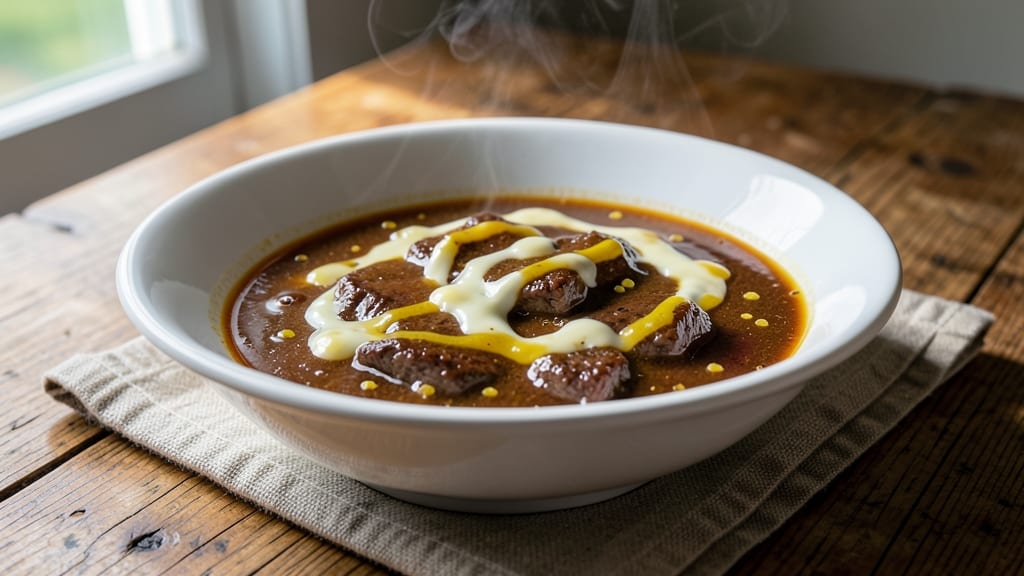
This Arby's beef and cheddar sauce recipe delivers the same velvety, umami-rich creaminess that makes their sandwiches legendary. The secret lies in slow-cooked beef broth, sharp cheddar, and a touch of mustard for that signature tang—no processed ingredients needed.
I've recreated this sauce exactly as it tastes at the restaurant, with just the right balance of richness and depth.
The sauce builds flavor through two key techniques: simmering the broth with aromatics until deeply concentrated, then melting the cheese in stages to prevent clumping. This method ensures a silky texture without graininess, while a splash of vinegar brightens the finish.
The result? A sauce so good, you'll want to drizzle it on everything from fries to burgers.
What sets this apart is the hidden umami kick—achieved through slow-cooked beef, Worcestershire, and a pinch of smoked paprika. The sauce thickens perfectly for dipping but stays smooth enough to spread, with just enough tang to cut through the richness.
Once you taste the difference, store-bought versions will never satisfy again.
Perfect for copying Arby's signature beef and cheddar sauce at home, this recipe makes enough for 4-6 servings—ideal for dipping, topping, or even as a pasta sauce. The ingredients are simple, but the technique transforms them into something restaurant-quality. Let's get started on recreating that iconic flavor.
Ingredients for arby's beef and cheddar sauce
Simple yet transformative ingredients recreate Arby's iconic velvety sauce at home.
| Ingredient | Amount | Notes |
|---|---|---|
| Beef Broth 🥩 | 2 cups | Homemade or high-quality store-bought |
| Sharp Cheddar Cheese 🧀 | 1 ½ cups | Freshly grated, sharp variety preferred |
| Unsalted Butter 🧈 | ½ cup | Cold, cubed for even melting |
| Yellow Mustard 🍯 | 1 tbsp | Dijon or prepared style |
| Worcestershire Sauce 🍶 | 1 tbsp | High-quality brand for umami depth |
| Apple Cider Vinegar 🍏 | ½ tbsp | Brightens and balances richness |
| Smoked Paprika 🌶️ | ½ tsp | For subtle smoky depth |
| Garlic Powder 🧄 | ½ tsp | Freshly ground preferred |
| Ground Black Pepper 🌶️ | ¼ tsp | Freshly cracked for best flavor |
| Diamond Crystal Kosher Salt 🧂 | ½ tsp | Adjust to taste |
The beef broth is non-negotiable for that signature umami depth—homemade or Knight's or Swanson premium brands work best. Sharp cheddar makes all the difference; Kraft or Cabot are reliable choices, but avoid pre-shredded (it contains anti-caking agents that prevent smooth melting). For the butter, Plugrá or Land O'Lakes unsalted are ideal, and keep it cold until adding to prevent premature melting. The Worcestershire sauce should be Lea & Perrins—it's the gold standard for umami in copycat recipes. Smoked paprika adds that subtle smoky note that separates this from generic cheddar sauces.
No beef broth on hand? Beef bouillon cubes dissolved in hot water (like Knorr) work in a pinch, though homemade is superior. Substituting cheddar? Pepper Jack adds heat, while Colby Jack offers a milder profile. For mustard, Dijon or whole-grain mustard adds complexity, but prepared mustard keeps it simple. The vinegar can be swapped for white wine vinegar if preferred, though apple cider adds a pleasant sweetness. Need to skip smoked paprika? Regular paprika plus a pinch of liquid smoke mimics the effect, though it's not identical. Always taste as you go—the sauce should balance rich, tangy, and slightly smoky.
This sauce thickens as it cools, so start with 2 cups of broth and adjust if needed. Store in an airtight container in the fridge for up to 5 days—it actually improves overnight as flavors meld. For longer storage, freeze in ice cube trays for easy portioning. Reheat gently on the stove with a splash of milk or broth to restore creaminess. The sauce doubles beautifully, so make extra for burgers, fries, or even mac and cheese—it's that versatile.
Why You'll Love This Recipe
- I’ll be real: I make a big batch and pretend it’s all gone in one sitting. The truth? It reheats perfectly, freezes like a dream, and still tastes like it was made fresh the next day.
- Five-Ingredient Magic: I swear by this combo—just broth, cheddar, butter, mustard, and Worcestershire. No fancy gadgets, no stress, and honestly? That tangy, rich depth hits the spot every time.
- Sauce That Sticks: Between us, this sauce clings to everything like it’s been glued there. Drizzle it on fries, slather it on burgers, or even toss it with roasted potatoes—it’s the kind of sauce that makes lazy weeknights feel like a win.
- Leftovers That Lie: I’ll be real: I make a big batch and pretend it’s all gone in one sitting. The truth? It reheats perfectly, freezes like a dream, and still tastes like it was made fresh the next day.
Step-by-step instructions for Arby's beef and cheddar sauce
This method delivers authentic Arby's sauce with a perfect balance of cheesy richness and savory depth.
Melt Butter and Bloom Spices
In a medium saucepan over medium-low heat, melt the 0.5 cup Unsalted Butter until it's completely liquid but not browned. This gentle heat ensures the butter melts evenly without developing any bitter flavors. Once fully melted, reduce heat to low and add the 0.5 tsp Smoked Paprika and 0.5 tsp Garlic Powder. Stir constantly for 30 seconds—you'll notice the spices releasing their aromatic oils, filling your kitchen with a warm, slightly smoky scent.
Here's the thing—blooming the spices this way extracts their full flavor potential. If you skip this step, you'll miss that subtle depth that makes this sauce truly special. Keep stirring gently to prevent the butter from burning while the spices warm through.
Add Wet Ingredients and Simmer
Pour in the 2 cups Beef Broth and bring the mixture to a gentle simmer over medium heat. Add the 1 tbsp Worcestershire Sauce, 1 tbsp Yellow Mustard, and 0.5 tbsp Apple Cider Vinegar, stirring to combine. The vinegar will make the mixture bubble slightly—this is normal and actually helps distribute flavors evenly.
Let the sauce simmer uncovered for 5-7 minutes until it reduces by about 25%. You're looking for a noticeable thickening where the sauce coats the back of a spoon. This reduction concentrates the flavors and creates that signature velvety texture. Don't walk away—simmering too long can make the sauce too thick, so keep an eye on it.
Incorporate Cheese and Season
Reduce heat to low and gradually whisk in the 1.5 cups Sharp Cheddar Cheese, adding it a handful at a time. The cheese will melt slowly—this gradual approach prevents clumping and ensures a smooth, lump-free sauce. Stir constantly until the cheese is completely melted and the sauce is homogeneous. This usually takes about 3-4 minutes of gentle stirring.
Add the 0.5 tsp Diamond Crystal Kosher Salt and 0.25 tsp Ground Black Pepper, then taste and adjust seasoning if needed. The cheese should be fully incorporated with no visible chunks, and the sauce should have a glossy sheen. If it's too thick, whisk in 1-2 tablespoons of warm water to reach your desired consistency.
Finish and Rest
Remove the saucepan from heat and let the sauce rest for 5 minutes. This resting period allows the flavors to meld completely and the sauce to reach its ideal texture. The cheese will continue to set slightly as it cools, so don't be surprised if it thickens a bit more during this time.
Give it a final taste and adjust seasoning if necessary. The sauce should be rich, slightly tangy from the vinegar, with a subtle smoky depth from the paprika. For best results, use the sauce immediately on roast beef sandwiches, but it will keep in the refrigerator for up to 5 days if stored in an airtight container. Reheat gently over low heat, stirring frequently to prevent scorching.
Pro Tips For Making Arby'S Beef And Cheddar Sauce
- Shred Cheese Properly: Grate the sharp cheddar yourself—pre-shredded cheese has anti-caking agents that make the sauce grainy. Use the large holes of a box grater for even melting, and work in batches if needed to keep the butter from separating.
- Simmer, Don’t Boil: Keep the heat at a gentle simmer, not a rolling boil, or the mustard and Worcestershire will cook off too fast, leaving a flat flavor. A low simmer (tiny bubbles, occasional swirls) keeps the sauce rich and balanced.
- Salt the Broth First: Season the beef broth with salt before adding it to the butter—this prevents the sauce from tasting bland later. Since you’re using unsalted butter, the broth’s seasoning carries more weight.
- Whisk in Butter Slowly: Add the butter a tablespoon at a time while whisking constantly, or it’ll clump into greasy lumps. If it separates, pull the pan off heat, stir vigorously, then reheat—no one wants a split sauce.
Essential equipment for great arby's beef and cheddar sauce
Saucepan Essentials
Start with a medium saucepan that has a 3-4 quart capacity—this gives you enough room to stir without splattering while preventing the sauce from boiling over. I recommend a stainless steel pan like All-Clad or Calphalon because they distribute heat evenly and won't react with acidic ingredients like vinegar.
Avoid non-stick pans for this recipe—they can't handle the prolonged simmering without risking damage or flavor transfer. 🔥
Whisk for Smoothness
A balloon whisk is your best friend for this sauce. The OXO Good Grips model works perfectly for its sturdy build and angled handle that prevents wrist strain. Use it to incorporate the cheese gradually and whisk constantly to avoid lumps.
If you don’t have a whisk, a rubber spatula will work, but you’ll need to be more vigilant about stirring continuously to prevent clumping.
Measuring Tools
Precision matters with this recipe, so invest in a digital kitchen scale for the cheese (I use the OXO Good Grips model) to measure 1.5 cups accurately. For liquids, a liquid measuring cup with clear markings ensures you add exactly 2 cups of beef broth.
A fine-mesh grater (like Microplane) is essential for freshly grating the cheddar—pre-shredded cheese contains anti-caking agents that ruin the sauce’s texture.
Heat Control Helpers
Use an instant-read thermometer (I swear by ThermoWorks Thermapen) to monitor the sauce’s temperature—it should never exceed 200°F during simmering. A silicon spatula helps scrape up any cheese stuck to the pan’s edges without scratching the surface.
For even heat distribution, place your saucepan on the back burner of a gas stove or the middle rack of an electric range.
Storage Containers
Store your finished sauce in glass airtight containers like Pyrex or Le Creuset to maintain freshness for up to 5 days. For freezing, use silicone ice cube trays—they’re perfect for portioning single servings.
Label containers with the date to track freshness. A fine-mesh strainer (like OXO) helps remove any accidental cheese clumps before serving.
Optional Upgrades
For a professional touch, a immersion blender (like Magic Bullet) lets you blend the sauce directly in the pot for ultra-smooth results. A microplane for garlic adds fresh flavor if you want to skip the powder.
For dipping, a small ceramic dipping bowl (like Corelle) keeps the sauce warm and ready to serve. These extras aren’t mandatory, but they elevate the experience. ✨
Nutrition facts
Frequently asked questions
Why does this sauce taste different from store-bought Arby's sauce?
This homemade version captures the restaurant's flavor profile more accurately because it uses freshly grated sharp cheddar and slow-simmered beef broth instead of processed cheese and artificial ingredients. The key difference is the umami depth from Worcestershire and smoked paprika, plus the tangy brightness from apple cider vinegar—elements that mass-produced sauces often lack.
Can I make this sauce without beef broth?
Yes, but the flavor will be less authentic. Use 2 beef bouillon cubes dissolved in 2 cups hot water as a substitute, or try 1 cup beef broth + 1 cup chicken broth for a milder taste. For a vegetarian option, mushroom broth works surprisingly well when combined with 1 tbsp soy sauce for umami. The sauce will still be creamy, but the signature beefy flavor will be noticeably different.
How do I fix lumpy sauce?
If you see lumps while melting the cheese, immediately remove the pan from heat and use an immersion blender or whisk vigorously to break them up. For stubborn clumps, strain the sauce through a fine-mesh sieve into a clean saucepan. Prevention is key—always melt cheese gradually over low heat while stirring constantly. A splash of warm water can also help thin the sauce if it's too thick.
What are the best uses for extra sauce?
This versatile sauce works perfectly on roast beef sandwiches, burgers, or as a dip for fries and onion rings. Try it as a pasta sauce with penne or macaroni, or mix it into mashed potatoes for a cheesy upgrade. For a creative twist, use it as a dipping sauce for mozzarella sticks or even as a topping for loaded baked potatoes. The possibilities are endless!
Can I make this sauce dairy-free?
Replace the butter with vegetable oil or dairy-free margarine, and use sharp vegan cheddar (like Violife or Daiya). Add 1 tbsp nutritional yeast for a cheesy flavor, and adjust the acidity with an extra 0.5 tbsp vinegar. The texture will be slightly thinner, but it'll still deliver that signature tangy, umami-rich profile.