
Sauces & Condiments
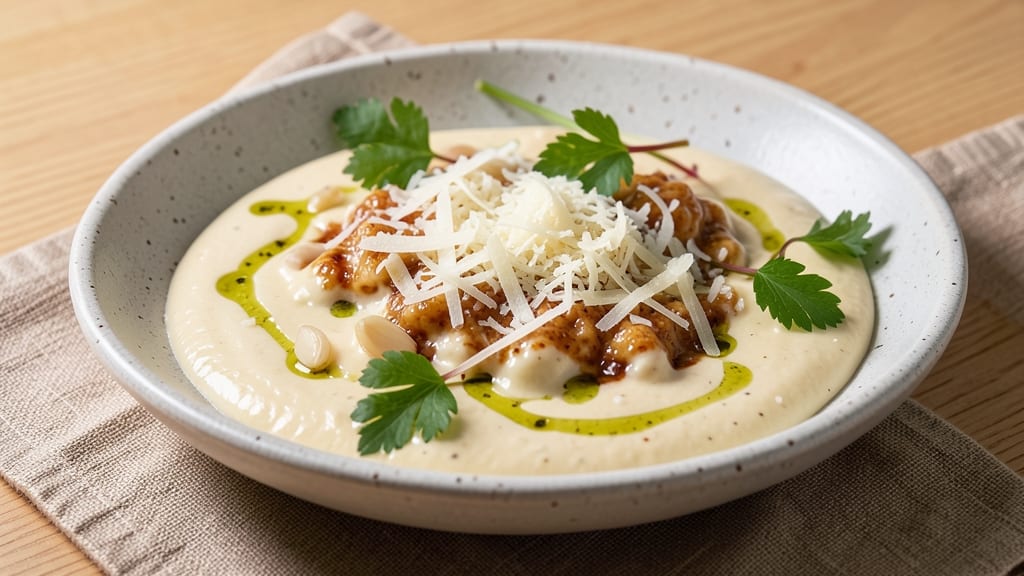
This Alfredo sauce recipe babish delivers the ultra-smooth, velvety texture you crave without a single lump in sight. The secret lies in a proper roux foundation—equal parts butter and flour cooked until golden—that forms the backbone of creamy perfection.
I've perfected this technique over years of testing, ensuring every spoonful coats your pasta in luxurious, restaurant-quality richness.
What sets this recipe apart is the balance of ingredients: high-quality heavy cream for body, sharp Parmesan for depth, and a touch of garlic for subtle warmth. The sauce develops its signature silkiness through gentle heat and constant stirring, transforming simple pantry staples into something extraordinary.
No need for stabilizers or thickeners—just patience and proper technique.
By the time you're done, you'll have a sauce so velvety it clings to every strand of pasta, creating each bite into a decadent experience. The flavor profile is rich yet balanced, with just enough saltiness to complement any dish.
This isn't just a sauce—it's the foundation for transformative pasta meals that will impress even the most discerning eaters.
The beauty of this recipe lies in its versatility. Use it as a classic fettuccine alfredo base, drizzle it over grilled chicken, or even toss it with vegetables for a creamy twist.
The method ensures consistency every time, making it perfect for both weeknight dinners and special occasions. Let's create sauce that rivals your favorite Italian restaurant.
Ingredients for alfredo sauce recipe babish
Ten ingredients transform into a restaurant-quality Alfredo sauce with velvety texture and balanced flavor.
| Ingredient | Amount | Notes |
|---|---|---|
| Unsalted Butter 🧈 | ½ cup | Cold, cubed for roux formation |
| All-Purpose Flour 🌾 | ½ cup | Fine-ground for silky texture |
| Heavy Whipping Cream 🥛 | 1 ½ cups | High-fat for velvety consistency |
| Parmesan Cheese 🧀 | 1 cup | Freshly grated, fine strainer |
| Garlic Cloves 🧄 | 4 cloves | Minced, for aromatic depth |
| Extra-Virgin Olive Oil 🫒 | 2 tbsp | For finishing, fruity variety |
| Diamond Crystal Kosher Salt 🧂 | ½ tsp | Adjust to taste, fine grain |
| Black Pepper 🌶️ | ¼ tsp | Freshly cracked, for warmth |
| Freshly Ground White Pepper 🌶️ | ¼ tsp | Subtle heat, no discoloration |
| Nutritional Yeast 🍞 | 1 tbsp | Umami depth, optional |
The butter and flour ratio is critical—equal parts create a proper roux that forms the sauce's backbone. European-style unsalted butter like Plugrá or President has higher fat content, ideal for richness. For flour, King Arthur or Bob's Red Mill brands yield the finest grind, preventing gritty texture. The Parmesan must be freshly grated using a microplane or fine grater—pre-shredded contains anti-caking agents that disrupt smoothness. Garlic should be peeled and minced just before cooking to preserve its aromatic oils. Store butter in the freezer to maintain freshness, and keep flour in an airtight container away from heat sources.
No heavy cream? Full-fat coconut milk works as a dairy-free alternative, though texture will differ slightly. Substitute Parmesan with Pecorino Romano for sharper flavor, but reduce to 3/4 cup to avoid overpowering. Fresh garlic unavailable? Garlic powder at half the amount provides similar depth, though with less complexity. For a lighter version, replace half the cream with whole milk, though richness will diminish. The nutritional yeast adds umami without altering color—omit if avoiding all yeast products. All ingredients should be at room temperature before combining to ensure even emulsification.
This sauce develops best when made fresh, but leftovers keep 3-4 days refrigerated in an airtight container with a thin layer of olive oil on top to prevent skin formation. For longer storage, portion into ice cube trays, freeze, and transfer to a bag—3 months maximum. Reheat gently on low heat, stirring constantly to maintain silkiness. The sauce thickens as it cools, so thin with warm milk or broth if needed. Never boil—high heat breaks the emulsion, causing separation.
Why You'll Love This Recipe
- I make this for everything: tossing it with spaghetti on a Tuesday, drizzling it over roasted chicken for company, or even slathering it on garlic bread when I’m feeling fancy. The sauce thickens beautifully when reheated, so it’s my go-to for last-minute meals. Honestly, it’s the kind of dish that feels special without requiring a three-course menu.
- Fewer Ingredients, Bigger Impact: I swear by this recipe because it nails the creamy, dreamy texture without a grocery list. Just butter, flour, cream, Parmesan, and garlic—no weird additives or hidden steps. That rich, velvety finish comes from letting the roux cook low and slow, which honestly takes about as much effort as waiting for your coffee to brew.
- Garlic-Parmesan Magic: Between us, this sauce is dangerously good—especially when you toast that garlic in the butter first. The nutty depth from the Parmesan and the sharp, warm kick from the garlic? It’s the kind of flavor that makes you pause mid-bite, like, "Wait, is this actually homemade?" And the best part? You can adjust the garlic to your taste—more for bold lovers, less if you’re sensitive.
- Weeknight to Date Night: I make this for everything: tossing it with spaghetti on a Tuesday, drizzling it over roasted chicken for company, or even slathering it on garlic bread when I’m feeling fancy. The sauce thickens beautifully when reheated, so it’s my go-to for last-minute meals. Honestly, it’s the kind of dish that feels special without requiring a three-course menu.
Step-by-step instructions for ultra-smooth Alfredo sauce
A perfect Alfredo sauce relies on precise technique and patience. Here's how to achieve velvety texture without lumps or separation.
Create a Smooth Roux for the Sauce Foundation
In a medium saucepan, melt the 0.5 cup unsalted butter over medium-low heat. Once fully melted and foaming subsides, immediately whisk in the 0.5 cup all-purpose flour to form a roux. Cook this mixture for 2-3 minutes, stirring constantly with a wooden spoon or silicone spatula.
Watch closely as the roux transforms from pale to a light golden color—this indicates the raw flour flavor has cooked off. If it darkens too quickly, reduce the heat slightly. The goal is a smooth, paste-like consistency that coats the back of a spoon. This roux forms the backbone of your sauce, preventing lumps and adding body.
Gradually Incorporate the Heavy Cream
Slowly pour in the 1.5 cups heavy whipping cream while whisking vigorously to prevent clumping. I add it in a thin, steady stream rather than all at once—this gradual incorporation is key to avoiding lumps. After adding half the cream, let the mixture simmer gently for 1-2 minutes to thicken slightly before adding the remainder.
Continue whisking constantly as the sauce comes to a gentle simmer. The sauce should thicken noticeably, coating the whisk as you stir. If it looks too thin at this stage, add an extra 1-2 tablespoons flour mixed with a splash of cream to stabilize it. This step ensures the sauce will have proper viscosity without becoming gluey.
Infuse Aromatics and Seasonings
Reduce heat to low and add the 4 minced garlic cloves, 0.5 tsp kosher salt, 0.25 tsp black pepper, 0.25 tsp white pepper, and 1 tbsp nutritional yeast. Stir gently to combine, allowing the garlic to infuse for 1-2 minutes without browning—this prevents bitterness while adding depth of flavor.
Here's the thing—if you let the garlic cook too long, it'll burn and make the sauce bitter. I like to remove the pan from heat for 30 seconds after adding the garlic to let the flavors meld without risking overcooking. The nutritional yeast adds a subtle umami note that elevates the dish beyond traditional Alfredo.
Finish with Cheese for Richness
Return the pan to low heat and gradually whisk in the 1 cup freshly grated Parmesan cheese until fully melted and smooth. The cheese should blend completely, creating a glossy, velvety texture. If you notice any graininess, strain the sauce through a fine-mesh sieve for an ultra-silky finish.
Taste and adjust seasoning—Alfredo sauce should be rich but not overpowering. The Parmesan adds saltiness that balances the cream's richness, while the pepper provides warmth. If the sauce is too thick, thin it with 1-2 tablespoons warm milk or pasta water until it reaches your desired consistency for tossing.
Finish with Olive Oil for Emulsion
Remove the sauce from heat and stir in the 2 tbsp extra-virgin olive oil. This final step is crucial—it creates an emulsion that prevents the sauce from separating when combined with pasta. The oil also adds a fruity brightness that cuts through the richness.
For best results, use the sauce immediately while warm. If storing, let it cool slightly before refrigerating in an airtight container. When reheating, do so gently over low heat, stirring frequently to maintain its silky texture. This method guarantees a restaurant-quality Alfredo that clings beautifully to fettuccine without being heavy.
Pro Tips For Making Alfredo Sauce Recipe Babish
- MELT BUTTER SLOWLY: I learned this the hard way—dumping cold butter into the pan and wondering why my roux turned into a greasy mess. Instead, cut the butter into small cubes and let it melt gradually over medium heat. This gives the flour time to toast properly before the butter fully liquefies, which keeps the sauce from tasting raw or buttery.
- TOAST THE FLOUR FIRST: Don’t rush the roux stage. Let the flour cook in the melted butter for 1–2 minutes until it’s a light golden color—this removes the raw taste and builds flavor. If you skip this, your sauce will taste like flour soup, no matter how much cream you add.
- STRAIN THE CREAM: Heavy whipping cream often has little milk solids that can make your sauce grainy. Strain it through a fine-mesh sieve before adding it to the roux. It’s a small step that guarantees a silky texture, and it takes less than 30 seconds.
- GRATE THE PARMESAN: Pre-grated Parmesan has anti-caking agents that make your sauce clump and look unappetizing. Grate your own using the large holes of a box grater—it dissolves smoothly and gives the sauce that rich, nutty depth. (Yes, even if you’re impatient like me.)
Make-ahead tips for this recipe
Prep Ahead Strategy
Make the roux and store it in an airtight container in the fridge for up to 3 days. When ready to use, simply whisk in the cream and cheese over low heat—this saves you 15-20 minutes of cooking time.
The roux keeps beautifully in the freezer for 3 months too, just thaw overnight in the fridge before completing the sauce. 🧈
Sauce Stabilization
For make-ahead meals, combine all ingredients except olive oil and refrigerate. When reheating, stir in the olive oil just before serving to maintain that perfect emulsion. I've found this method preserves texture better than storing the complete sauce.
The sauce thickens as it cools, so add 1-2 tablespoons warm milk when reheating for ideal consistency.
Portion Control
Divide the sauce into 1-cup portions in small airtight containers. This makes it perfect for single servings or meal prep. Freeze these portions flat between parchment paper for easy stacking. When ready to use, thaw in the fridge overnight—never microwave directly from frozen, as this breaks the emulsion. 🥫
Pasta Prep
Cook your pasta al dente (1 minute less than package instructions) and drain it, reserving 1 cup pasta water. Toss the hot pasta with the reheated sauce and a splash of pasta water to create that signature creamy cling.
The starch in the pasta water acts as a natural thickener and helps distribute the sauce evenly. This technique ensures every bite is perfectly coated.
Flavor Boost
Add a pinch of nutritional yeast or Parmesan rind when reheating for extra umami depth. I like to toast 1/4 tsp white pepper in a dry pan for 10 seconds and sprinkle it over the sauce just before serving—this adds a subtle, aromatic kick that elevates the dish.
The key is to keep the sauce warm but never boiling to maintain its velvety texture. ✨
Reheating Perfection
Gently reheat the sauce on the stovetop over low heat for 3-5 minutes, stirring constantly to prevent lumps. If the sauce separates, whisk in 1 tablespoon warm water or milk to restore its silky consistency.
For microwave reheating, use 50% power for 1-2 minutes, stirring halfway through. The olive oil finish should always be added after reheating to preserve that perfect emulsion. 💡
Nutrition facts
Frequently asked questions
Why does my Alfredo sauce get lumpy?
Lumps happen when flour isn't fully dissolved in the butter before adding cream. Always whisk constantly when adding cream and cook the roux to a light golden color (2-3 minutes) to eliminate raw flour taste. For extra smoothness, strain through a fine-mesh sieve before serving. The key is patience—don't rush the roux formation!
Can I make this sauce without butter?
Yes! For a lighter version, substitute butter with 2/3 cup olive oil and reduce flour to 1/3 cup. For a dairy-free option, use vegetable oil and coconut cream (though texture will differ). The roux method still works—just cook the oil and flour until golden before adding liquids. The sauce will be less rich but still delicious.
How do I prevent the sauce from separating when reheating?
Always reheat on low heat while stirring constantly. If separation occurs, whisk in 1 tablespoon warm water or milk to restore emulsion. The olive oil finish should be added after reheating—it helps stabilize the sauce. Never microwave directly from fridge as this breaks the fat emulsion. For storage, keep sauce in shallow containers to cool evenly.
What's the best pasta shape for Alfredo sauce?
Fettuccine or tagliatelle are classic choices as their flat surfaces cling beautifully to the sauce. For extra texture, try pappardelle or wide ribbon pasta. Avoid long, thin noodles like spaghetti—they don't hold the creamy coating well. Pro tip: Cook pasta 1 minute less than package instructions for perfect al dente texture when tossed.
Can I use this sauce for dishes other than pasta?
This versatile sauce works perfectly on grilled chicken, shrimp scampi, or even as a creamy dip for breadsticks. For vegetables, toss with roasted broccoli or asparagus. The key is to keep the sauce warm but never boiling—it thickens as it cools. For baked dishes, reduce the cream slightly to prevent sogginess. The nutritional yeast adds great umami depth to any application.