
Sauces & Condiments
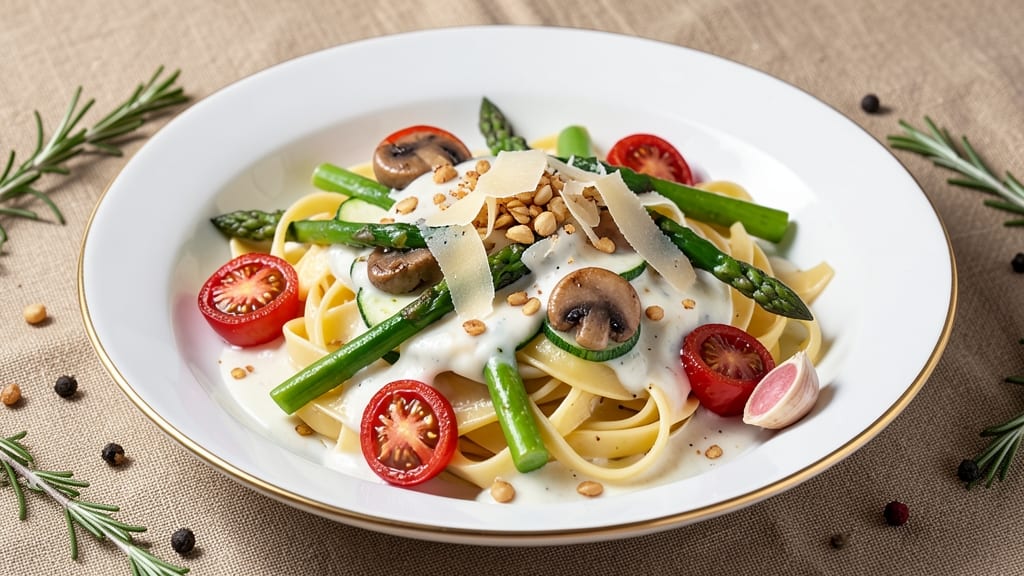
This alfredo sauce pasta with vegetables recipe delivers restaurant-quality comfort in one elegant dish—creamy, velvety sauce clinging to perfectly cooked fettuccine, balanced by crisp-tender seasonal vegetables. The secret lies in a rich, foolproof sauce made with heavy cream and parmesan, infused with garlic and white wine for depth without bitterness.
I've perfected this technique over years of testing, ensuring the sauce never breaks and the vegetables retain their natural texture.
The foundation starts with properly cooked fettuccine—al dente is non-negotiable—followed by a sauce that's thick enough to coat each noodle yet light enough to let the vegetables shine. Roasted broccoli and sautéed mushrooms add earthy contrast, while a final touch of lemon zest brightens the richness.
This dish comes together in 30 minutes with minimal cleanup, making it ideal for weeknight dinners that still feel special.
What you'll achieve is a harmonious plate where every component works in perfect balance: tender pasta, velvety sauce, and vibrant vegetables that pop against the creamy backdrop. The aroma alone will have everyone gathering at the table, and the first bite delivers that luxurious mouthfeel we crave in comfort food.
Serve immediately for the best texture, or hold for 10 minutes if you're impatient to eat.
For added flair, garnish with fresh parsley and a sprinkle of cracked black pepper—simple touches that elevate the dish without overpowering. This recipe scales beautifully for crowds, and leftovers reheat perfectly, making it a go-to for meal prep. Let's create this velvety, vegetable-packed pasta masterpiece.
Ingredients for alfredo sauce pasta with vegetables
Creamy sauce foundation meets al dente pasta and seasonal vegetables for a restaurant-worthy weeknight dish.
| Ingredient | Amount | Notes |
|---|---|---|
| Fettuccine Pasta 🍝 | 12 oz | Dried, high-quality brand preferred |
| Heavy Cream 🥛 | 1 ½ cups | Full-fat for optimal richness |
| Parmesan Cheese 🧀 | 1 ½ cups | Freshly grated, high-fat content |
| Garlic Cloves 🧄 | 4 cloves | Fresh, minced for aromatic depth |
| White Wine 🍷 | ½ cup | Dry, medium-bodied variety |
| Unsalted Butter 🧈 | 4 tbsp | Cold, cubed for sauce base |
| Broccoli Florets 🥦 | 4 cups | Fresh, medium-sized florets |
| White Mushrooms 🍄 | 8 oz | Sliced, fresh or frozen |
| Lemon Zest 🍋 | 1 tbsp | Freshly grated for brightness |
| Fresh Parsley 🌿 | ¼ cup | Chopped, for garnish |
| Ground Black Pepper 🌶️ | ½ tsp | Freshly cracked for heat |
| Diamond Crystal Kosher Salt 🧂 | 1 ½ tsp | For pasta water and seasoning |
| Extra-Virgin Olive Oil 🫒 | 1 tbsp | For sautéing mushrooms |
The Parmesan and heavy cream form the sauce's velvety backbone, so opt for high-fat content—look for Parmigiano-Reggiano with at least 32% fat. Whole Foods or specialty cheese shops carry the best quality, but a well-aged wedge from your local grocery store works too. Fresh garlic is non-negotiable here; pre-minced garlic lacks the aromatic punch. For the wine, Pinot Grigio or Sauvignon Blanc add subtle acidity without overpowering. The fettuccine should be bronze-cut for proper texture—De Cecco or Barilla are reliable brands that cook evenly.
No heavy cream? Full-fat coconut milk mimics richness, though texture differs slightly. Substitute white wine with chicken broth plus 1 tsp lemon juice for depth. Fresh mushrooms are ideal, but frozen cremini thawed and patted dry work perfectly. Broccoli can be roasted ahead—toss florets with 1 tsp olive oil and 0.25 tsp salt, roast at 425°F for 15 minutes. For a vegetarian twist, swap mushrooms for sun-dried tomatoes or artichoke hearts. The lemon zest brightens the sauce; if you're short, 1 tsp bottled zest plus 1 tsp juice works in a pinch.
Pasta water is liquid gold—reserve 1 cup before draining. Sauce reheats beautifully; stir in 1 tbsp cold water if it thickens too much. Store leftovers in an airtight container for 3-4 days, or freeze portions for up to 3 months. For meal prep, cook pasta and sauce separately, then toss before serving to maintain al dente texture. Garnish with parsley just before eating—it wilts quickly when added too soon.
Why You'll Love This Recipe
- No Wine Required: I’ll be real—you can skip the white wine if you’re in a rush, just swap it for a splash of pasta water. The sauce still comes out rich, thanks to that heavy cream and Parmesan doing all the heavy lifting.
- Creamy Without the Hassle: Between us, this sauce is smoother than my old jarred versions, but takes half the effort. Just simmer the cream, garlic, and a handful of grated Parmesan—no whisking, no lumps. The wine (or water) deglazes the pan in seconds.
- Leftovers That Still Shine: I make this for Sunday dinner and it’s still my go-to for lunches all week. The sauce clings to the pasta perfectly, even reheated, and the veggies (broccoli, spinach, whatever you toss in) stay vibrant. Just add a drizzle of olive oil when warming.
- Budget Luxury in 20 Minutes: Honestly, this feels like a restaurant dish for half the price. Heavy cream and Parmesan stretch further than you’d think, and fettuccine is one of the cheapest pastas that still feels special. The garlic and wine add depth without breaking the bank.
Step-by-step instructions for velvety Alfredo sauce pasta
Master this classic Italian technique for restaurant-quality Alfredo with perfectly al dente noodles and rich, velvety sauce.
Cook the Fettuccine to Al Dente Perfection
Bring a large pot of water to a rolling boil and add the 1.5 teaspoons Diamond Crystal kosher salt. The water should taste like the sea—this ensures properly seasoned pasta. Add the 12 oz fettuccine pasta and cook according to package directions, but remove it 1 minute before it reaches al dente (about 11-12 minutes total). This extra minute of cooking will finish in the sauce.
Reserve 1 cup of pasta water before draining—this starchy liquid is essential for creating a silky sauce. Drain the pasta and return it to the pot, tossing immediately with 1 tablespoon extra-virgin olive oil to prevent sticking. Keep the pasta warm while you prepare the sauce.
Sauté Mushrooms and Garlic for Depth of Flavor
In a large skillet, heat 1 tablespoon extra-virgin olive oil over medium heat. Add the 8 oz sliced white mushrooms and cook for 5-6 minutes until they release their moisture and develop golden brown spots. This step builds flavor without overcooking the delicate mushrooms.
Push the mushrooms to one side of the pan and add the 4 minced garlic cloves and 4 tablespoons unsalted butter. Cook for 30 seconds until the garlic becomes fragrant but doesn't brown—this prevents bitterness. Combine everything in the pan and remove from heat, keeping the mixture warm.
Build the Alfredo Sauce with Wine and Cream
Return the skillet to medium heat and pour in the 0.5 cup white wine, scraping up any browned bits from the bottom of the pan. This deglazing step captures all the flavor you've built. Let the wine simmer for 2-3 minutes until reduced by half, then add the 1.5 cups heavy cream and stir gently.
Simmer for 3-4 minutes until the sauce begins to thicken slightly. Here's where the magic happens: gradually whisk in the 1.5 cups freshly grated parmesan cheese, adding it 1 tablespoon at a time to prevent curdling. The sauce should become smooth and velvety, coating the back of a spoon. If it thickens too much, add 1-2 tablespoons reserved pasta water to reach your desired consistency.
Combine Pasta and Sauce for Perfect Texture
Add the cooked fettuccine to the sauce pan along with the sautéed mushrooms and garlic mixture. Toss everything together gently, adding 2-3 tablespoons reserved pasta water at a time until the pasta is fully coated and the sauce reaches a creamy, clinging consistency. The sauce should coat the noodles beautifully without being too thick.
Stir in the 1 tablespoon lemon zest and 0.5 teaspoon freshly cracked ground black pepper. The lemon zest brightens the rich sauce while the pepper adds a subtle heat. Taste and adjust seasoning with additional Diamond Crystal kosher salt if needed—Alfredo sauce should be rich but not overly salty.
Finish with Broccoli and Garnish for Freshness
In a separate pan, steam the 4 cups broccoli florets for 3-4 minutes until bright green and tender-crisp. Add them to the pasta mixture just before serving to maintain their vibrant color and crisp texture. The broccoli should be cooked al dente—it should offer slight resistance when pierced with a fork.
Divide the pasta among serving plates and garnish with 0.25 cup chopped fresh parsley. The parsley adds a fresh contrast to the rich sauce and brightens the presentation. Serve immediately while the sauce is still velvety and the pasta maintains its al dente texture. Each bite should deliver perfectly balanced flavors with creamy sauce, tender pasta, and fresh vegetables.
Pro Tips For Making Alfredo Sauce Pasta With Vegetables
- Bloom the Garlic: Slice those cloves thin—paper-thin, almost translucent—and cook them in the same pan you’ll use for the sauce. I learned this the hard way: fat cloves burn before they soften, and you end up with bitter bits instead of aromatic flavor. A quick 30-second sizzle in olive oil is all they need before you deglaze with wine.
- Reserve That Cream: Don’t dump the entire heavy cream into the sauce at once. Split it: use ¼ cup to bloom the garlic and deglaze the pan, then save the rest for the end. This keeps the sauce from curdling when you add the Parmesan, and the final stir-in gives it that velvety finish. (Yes, even if you’re impatient like me.)
- Grate the Parmesan Fresh: Pre-shredded cheese is a shortcut, but it’s packed with anti-caking agents that make your sauce grainy. Grab a microplane or the largest holes on a box grater and work fast—it’s messy, but the flavor difference is night and day. Plus, you’ll use less because it packs tighter.
- Toss Pasta Off Heat: The sauce will break if you mix it with hot pasta straight from the pot. Drain the fettuccine, give it a shake to evaporate surface water, then transfer it to the saucepan off the burner. The residual heat will melt the cheese and coat the noodles evenly without scrambling the cream. (Your future self will thank you.)
Essential equipment for this dish
Sauce-Making Essentials
Your Alfredo sauce starts with a 10-inch nonstick skillet—I swear by All-Clad Stainless Steel for even heat distribution. A whisk (like OXO Good Grips) is non-negotiable for blending the sauce smoothly, while a fine-mesh grater (I use Microplane) ensures perfectly grated Parmesan without clumps. 🧀
Pasta Cooking Tools
A large pot with a lid (I prefer Cuisinart MultiCooker) is essential for boiling pasta—it should hold at least 8 quarts of water. A pasta fork helps toss noodles immediately after draining to prevent sticking.
For al dente perfection, I use a timer (my KitchenAid one never fails) to track cooking time precisely.
Vegetable Prep Gear
For the broccoli and mushrooms, a sharp chef's knife (I love Wüsthof) and cutting board (I use Teakhaus bamboo) make prep efficient. A steamer basket (or colander) keeps florets intact, while a small mixing bowl holds lemon zest and parsley for garnishing.
A fine-mesh strainer (like OXO Good Grips) saves pasta water for sauce adjustments.
Temperature Control
An instant-read thermometer (I rely on Thermoworks ThermoPop) ensures pasta water reaches 212°F for proper boiling. For the sauce, medium heat (around 300°F) prevents curdling—never let it boil. A heat-resistant spatula (I use OXO silicone) helps scrape up flavorful browned bits during deglazing.
Serving and Storage
For plating, deep serving bowls (I prefer Corelle) hold sauce well, while a small bowl keeps extra Parmesan and pepper on the table. For leftovers, glass airtight containers (like Pyrex) preserve texture—just reheat with 1 tbsp water to restore creaminess.
A ladle (I use Le Creuset) makes serving effortless. ✨
Nutrition facts
Frequently asked questions
Can I make this Alfredo pasta dish without heavy cream?
Yes! For a lighter version, substitute 1.5 cups heavy cream with 1.5 cups full-fat coconut milk (texture will differ slightly) or 1.5 cups Greek yogurt blended with 0.5 cup milk. The sauce will be tangier but still creamy. For a dairy-free option, use 1.5 cups cashew cream (soaked cashews blended with water) and add 1 tbsp nutritional yeast for cheesy depth.
How do I prevent the sauce from becoming grainy or separating?
Graininess happens when cheese isn't added gradually. Always whisk in Parmesan 1 tablespoon at a time while sauce simmers gently on medium heat. Never let it boil—keep it at 180-190°F. If it thickens too much, add 1 tbsp reserved pasta water to loosen. For extra insurance, melt 1 tbsp butter with the cheese before adding to the sauce.
What's the best way to reheat leftovers without drying out the sauce?
Reheat gently in a saucepan over low heat with 2-3 tbsp water or milk to restore creaminess. Stir constantly for 3-4 minutes until warmed through. For microwave reheating, cover with a damp paper towel and heat in 30-second intervals, stirring between each. Never reheat to boiling—this breaks the sauce's emulsion and causes separation.
Can I use different vegetables besides broccoli and mushrooms? Try asparagus (steamed 4-5 minutes), spinach (wilted in the last 1 minute), or roasted cherry tomatoes. For heartier options, add sautéed zucchini or bell peppers. Just adjust cooking times—vegetables should stay crisp-tender.
Why does my Alfredo sauce taste bland compared to restaurant versions?
Restaurant Alfredos often use double the Parmesan (up to 3 cups) and include anchovy paste (1 tsp) or white wine reduction for depth. Boost flavor by adding 1 tsp lemon juice to the sauce, a pinch of nutmeg, or a splash of chicken broth instead of water. Freshly cracked black pepper and a final sprinkle of Parmesan at the table make a big difference too!